







Oil and gas hiring trends Nigeria readers encounter can look dramatic when a few employers advertise many roles. Before changing your career plan, check the breadth behind the headline. A burst of ads may deserve investigation, but it cannot establish that every operator is expanding or that a new course will lead to work.
NISER’s latest vacancy report illustrates this distinction. Its oil-and-gas advertisements cluster heavily around two drilling companies. This guide explains the historical figures, then offers a blank method for checking current opportunities and comparing training routes. We have not collected a new vacancy survey or tested a placement programme.
Oil and gas hiring trends Nigeria: date the evidence first
The NISER release was published on 1 November 2026. However, the underlying Q2 report covers April–June. It records 660 advertisements in The Guardian, The Punch and The Nation. Those are captured newspaper ads, not every Nigerian opening or completed hire.
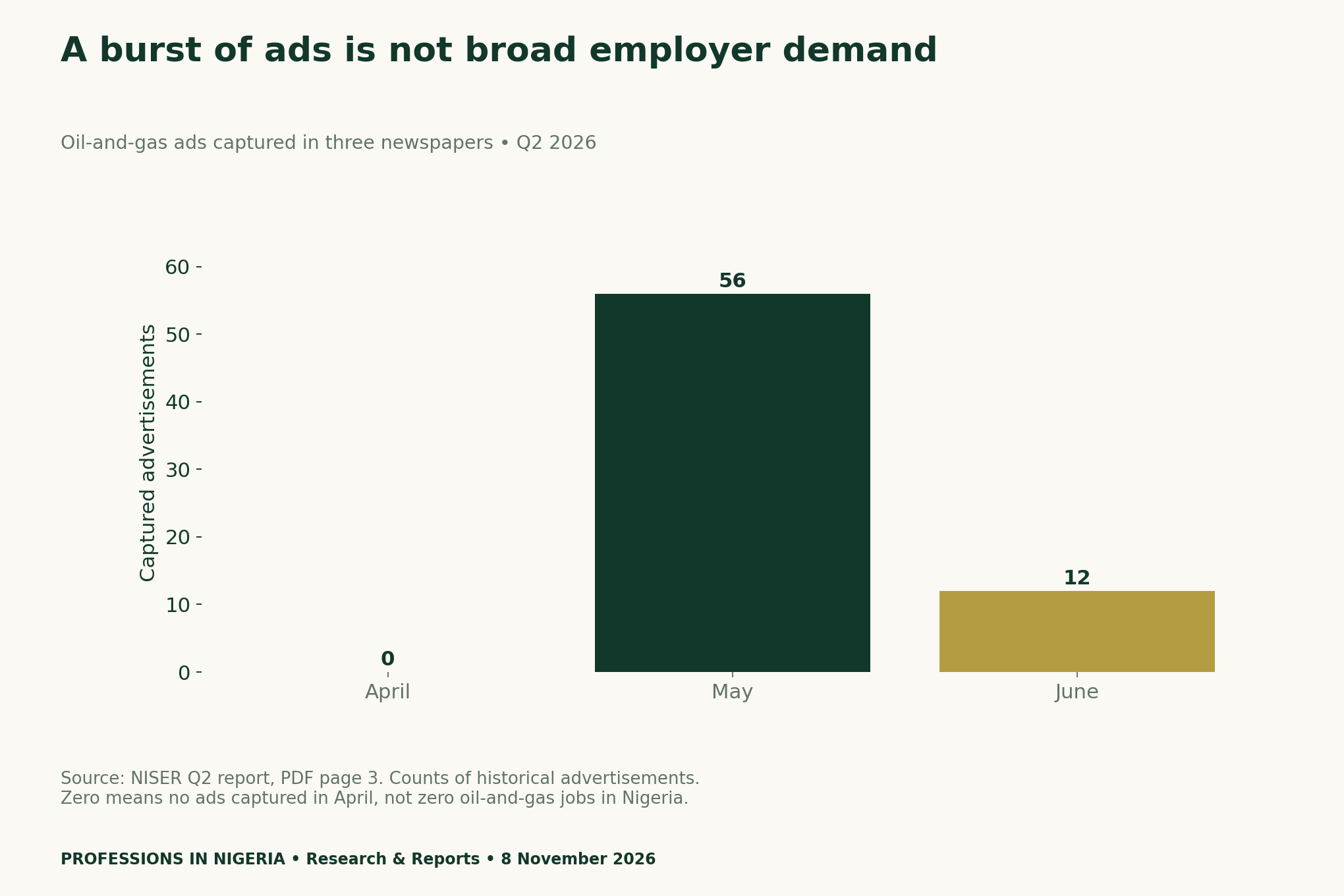
The three monthly counts total 68. Yet the zero for April only means no relevant ads appeared in the report’s captured set. It does not establish that the industry offered no work. Likewise, May’s 56 ads do not prove that 56 people started jobs. Keep the observation and the outcome separate.
Ask how many employers sit behind the roles
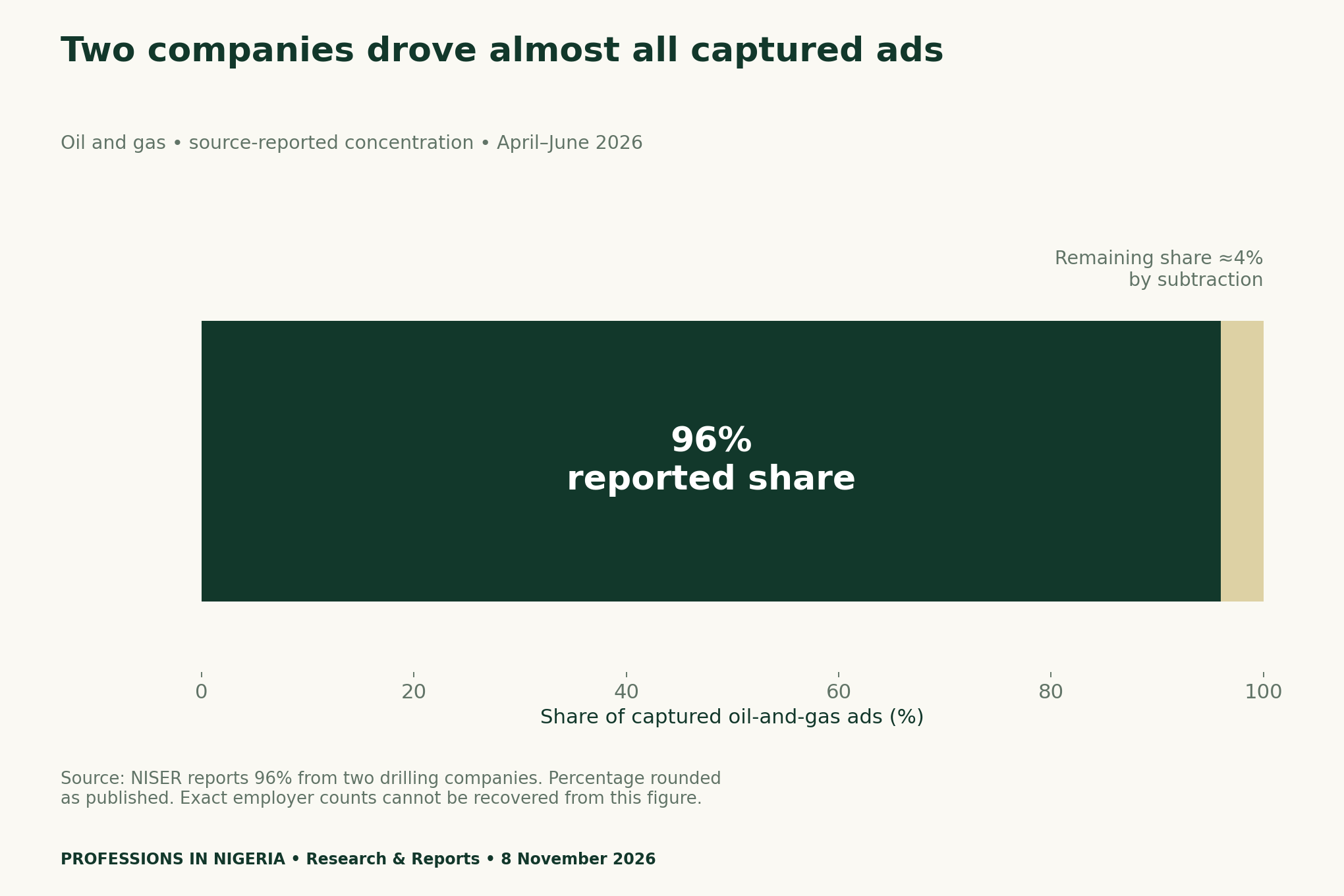
NISER attributes 96% of the captured oil-and-gas ads to two drilling companies. The report names Geoplex Driliteq and Megashore in its discussion. This is a rounded percentage, so we do not multiply it by 68 and present the result as an exact number of company ads. The employer-level split is not supplied.
Also, a concentration finding is not a criticism of those companies. One project or contract may involve several roles. The relevant career question is whether the signal extends beyond those employers, persists over time and matches your target work. The report does not answer those current questions for you.
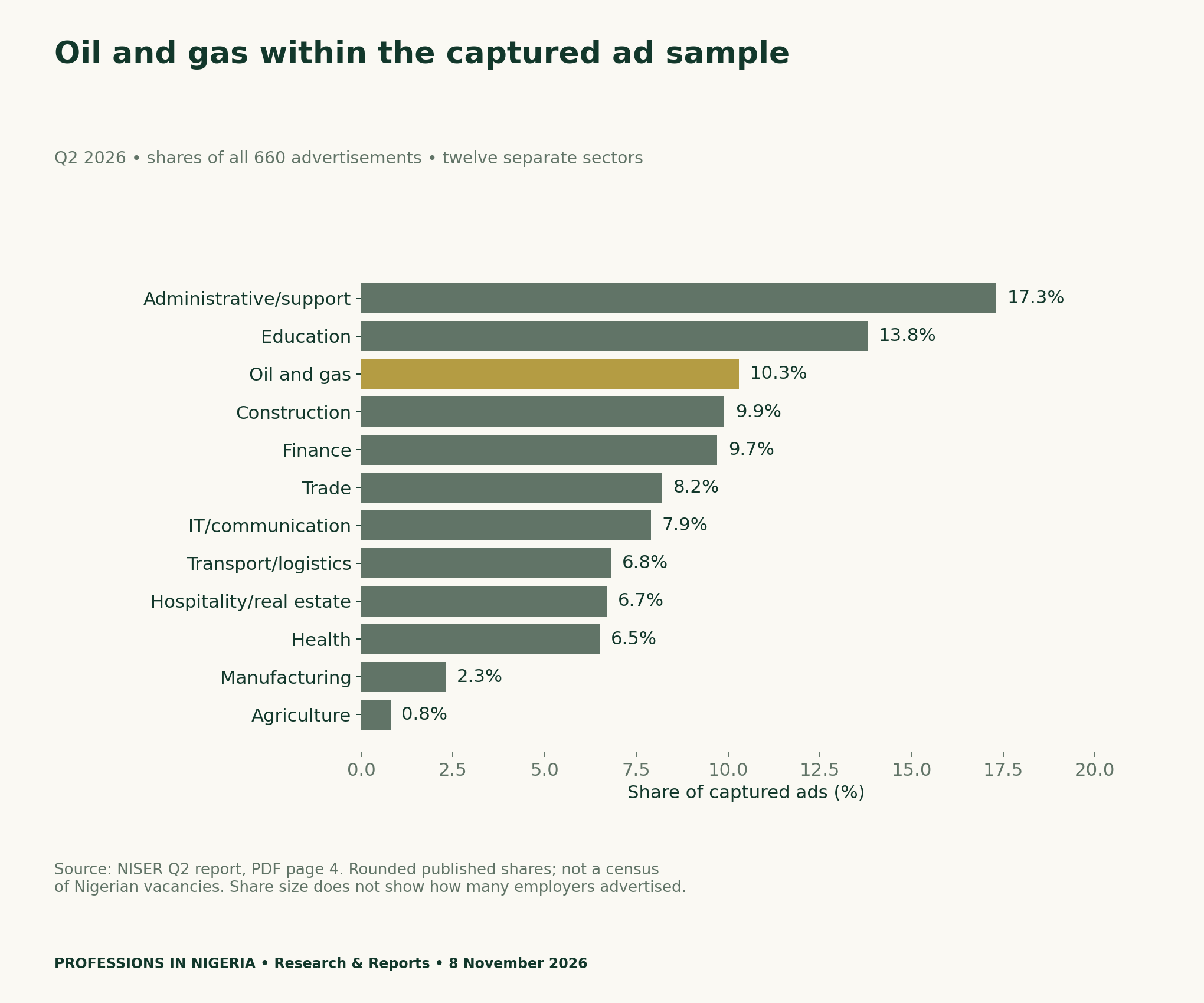
The wider sample places oil and gas at 10.3% of captured ads. That share provides context, but it is not a measure of job security or training value. Several advertisements from one employer can raise a sector’s share without broadening the set of employers a candidate could approach.
Build a current official-vacancy register
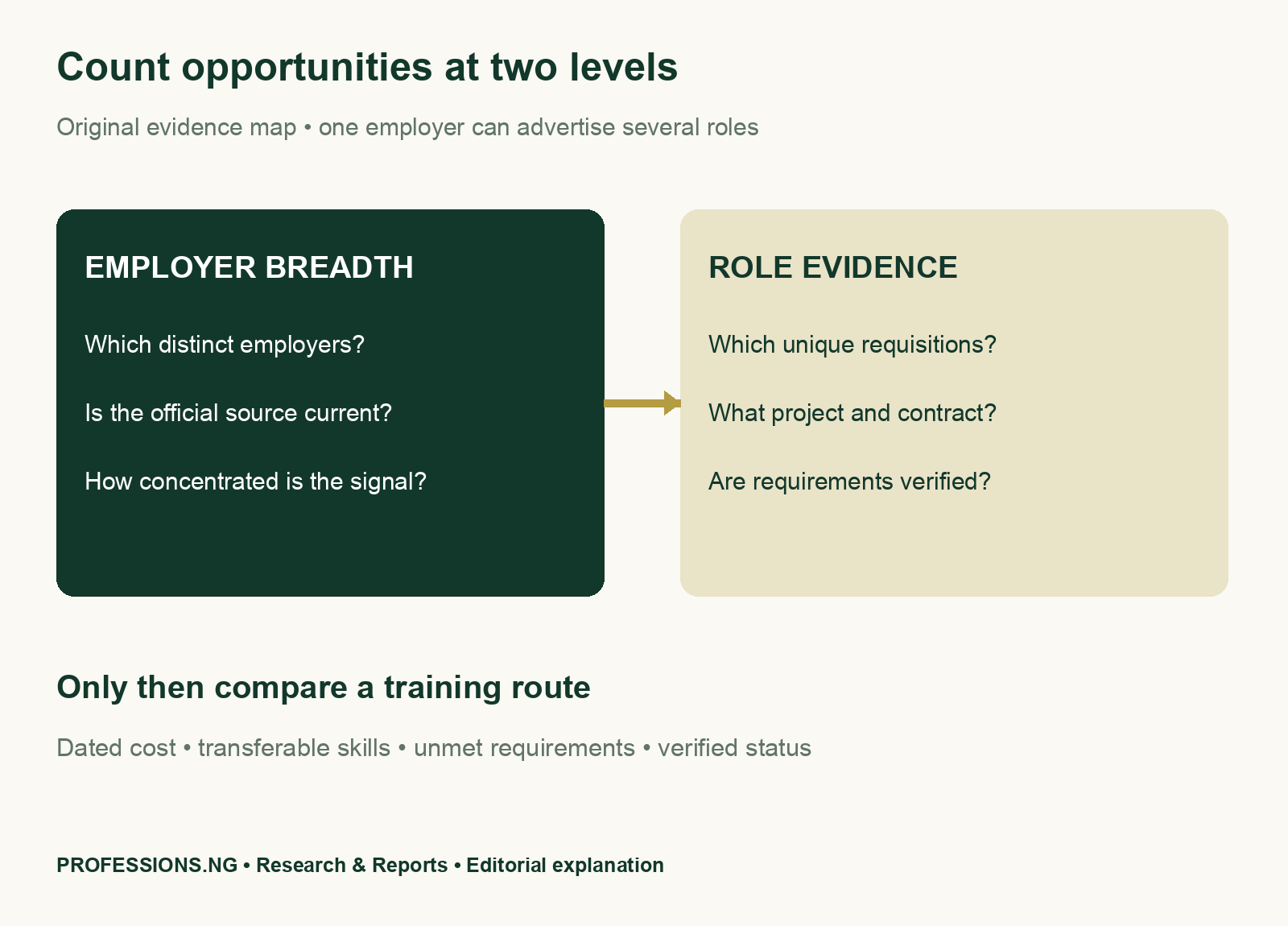
First, define a role family and a practical location or work arrangement. Then declare a collection window. Our register has room for 30 entries, but it contains no observed vacancies. Use it to record only the official postings you actually check. If you find fewer eligible roles, report that smaller number.
For each entry, retain the employer, official URL, access date and requisition ID. Also, copy the role location, contract type, qualification wording and closing status. Record a project reference only where the source supplies one. Mark missing details as unknown rather than filling them with a reasonable-sounding guess.
Next, deduplicate by employer and requisition ID. When no ID exists, compare the title, location and wording, then retain an ambiguity flag. A repost should not silently become another opportunity. After cleaning the register, count unique roles and distinct employers as two separate results.
Check project fit without assuming long-term expansion
A current role may have a fixed term, a specific project or a narrow location requirement. Therefore, read the actual terms before treating it as a general sector signal. An employer’s earlier announcement may remain online after applications close. Check the current status on its official recruitment channel.
Similarly, broad industry news cannot establish your eligibility. Some roles may require verified technical experience, professional registration or safety-related training. Check the employer and responsible regulator where relevant. A short course does not automatically grant permission to perform regulated or safety-critical work.
Compare the course with a transferable skills route
Before spending, identify the exact requirement the proposed course would address. Then obtain a dated written quote for fees, examinations, materials, travel and study time. Keep the total cost unknown until you have real information. We supply no market prices or assumed salary gain.
Also, compare a transferable skills route. Ask where else the same documented skill could be useful and which requirements would still remain. This is a comparison question, not a claim that a general course is always better. The appropriate route depends on verified roles, your existing evidence and realistic resources.
If a provider promises placement, ask for the terms and independently check the claim. The NISER report cannot validate it. Our qualification-requirements guide explains a consistent way to separate minimum, alternatives, preferences and experience. For supplier-readiness evidence, see our distinct oil-and-gas manufacturing skills report.
Download the evidence and blank planning tools
These files retain the source figures and give you a transparent starting point. The current-vacancy register and training comparison are blank. The verification protocol describes proposed collection, not work already carried out.
- Source figures and measurement ledger (CSV)
- Blank official-vacancy verification register (CSV)
- Blank training-route comparison (CSV)
- Prospective vacancy verification protocol (CSV)
Method, limitations and citation
Research checked 8 November 2026. We retained the NISER PDF and transcribed its monthly counts, rounded concentration statement and sector shares. Counts sum to 68; the approximate remaining concentration share is 100 minus 96. No exact employer-level counts were reconstructed. PDF page references in the data file differ from printed slide numbers.
The report omits many online and informal recruitment routes. Historical advertising cannot establish sustained expansion, salaries, hiring completion or future security. No current employer audit, training-return study or provider endorsement is claimed. Suggested citation: Professions In Nigeria, “Oil and Gas Hiring Trends Nigeria: Check Employer Breadth,” 8 November 2026. Attribute historical figures to NISER and identify our blank methods as original resources.


