







A digital skills mentorship plan in Nigeria should make feedback useful, not simply count mentors. Before a review, prepare a small work sample, explain what you tried and ask one precise question. After it, record what you changed. That creates a clearer learning record than a list of sessions attended.
Biase BOLD’s launch provides a timely example of the distinction. Its announced learner and mentor numbers support a simple staffing ratio. They do not establish individual contact time or prove learning outcomes. This guide combines those limited facts with an original blank 12-week planner, a transparent capacity illustration and a reader-input cost worksheet.
What Biase BOLD announced—and what it did not
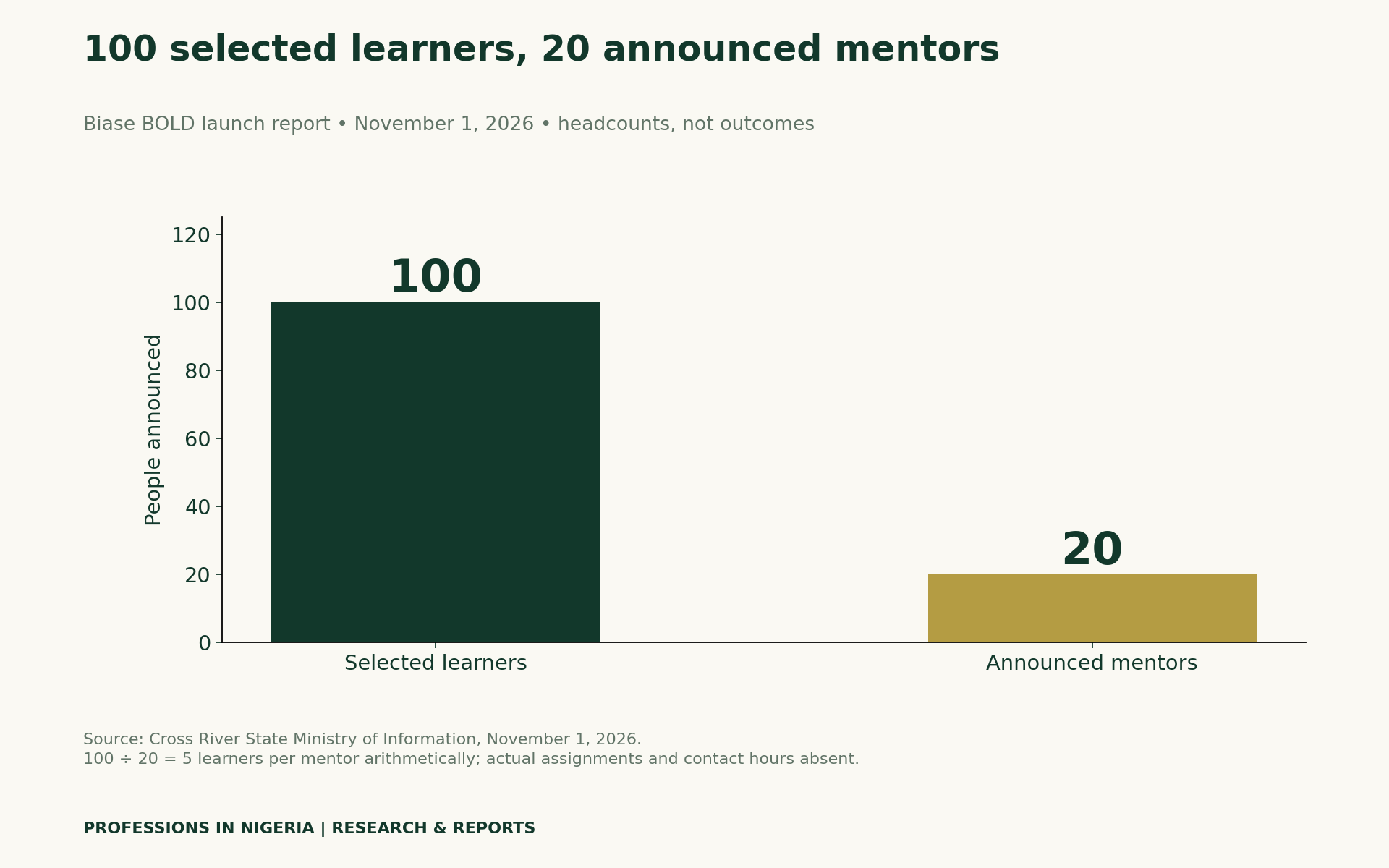
The Cross River State Ministry of Information’s November 1, 2026 launch report describes 100 selected youths from 11 Biase wards, a 12-week programme and 20 mentors. Training was scheduled to start November 2. Five named areas are AI, digital marketing, content creation, data analysis and agritech.
The October 29 advance announcement describes the training as free. Selection has already been reported, so this article is not an invitation to apply. The launch account identifies the Evidence Group as a political support organisation; reporting the programme is not an endorsement.
The available announcements do not establish observed attendance, completion, earnings or placement outcomes. Nor do they supply actual mentoring allocations or contact hours. Dividing 100 learners by 20 mentors gives five learners per mentor, but it cannot tell a participant how much individual support they will receive.
Separate a staffing ratio from feedback capacity
Consider a clearly hypothetical arrangement. Assume each of 20 mentors offers one group session per week and each session lasts 60 minutes. That produces 20 group sessions and 1,200 mentor-session minutes per week in aggregate. Both the frequency and duration are assumptions, not programme promises.
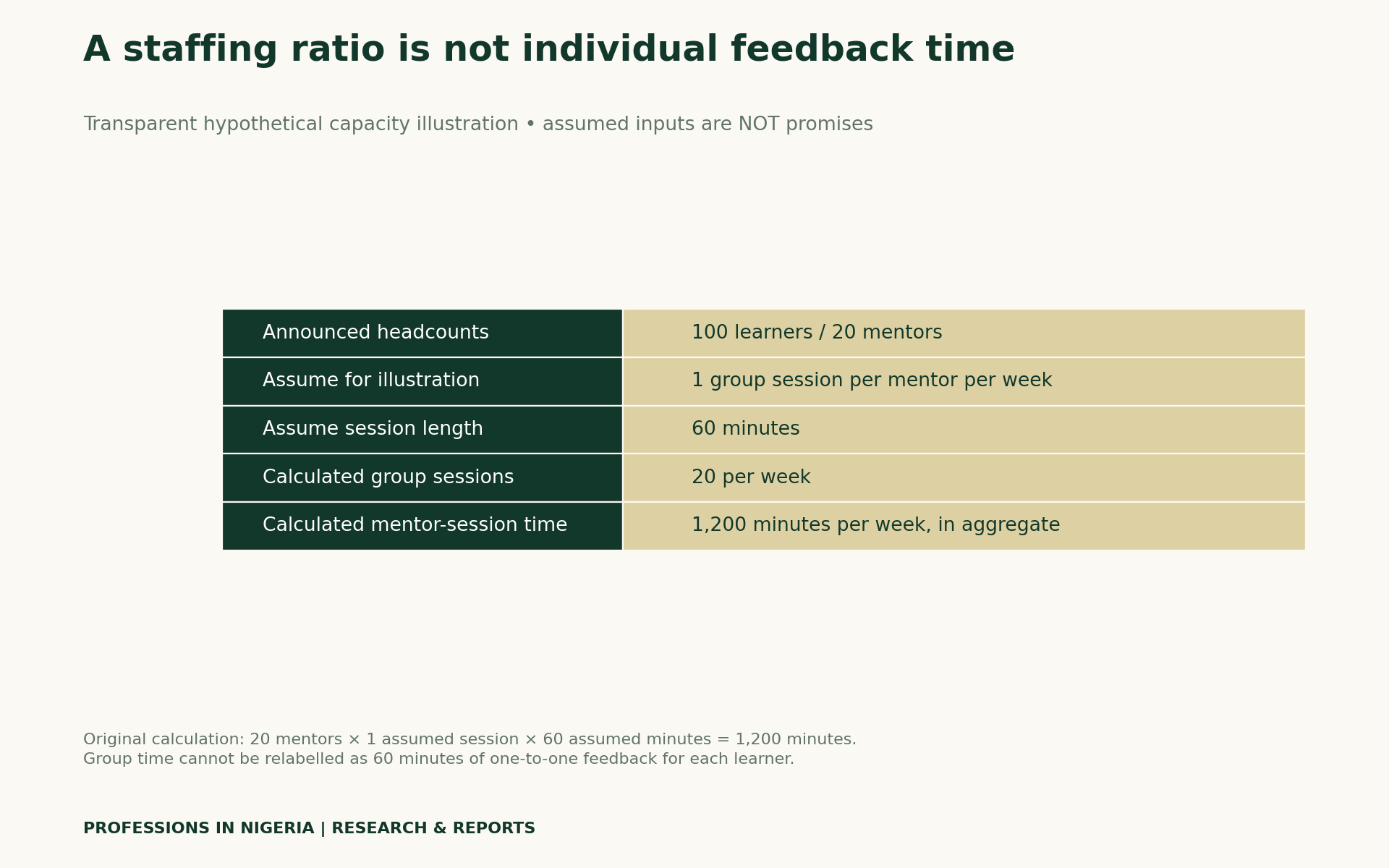
A learner attending a 60-minute group session has not necessarily received 60 minutes of individual feedback. Demonstrations, shared discussion and questions from other learners use time too. Even dividing the session length equally would create another assumption about how the session works. Ask how reviews are organised rather than treating the ratio as a service entitlement.
The capacity CSV keeps the two assumed time inputs visible. Change them only to model a stated alternative, and label the result accordingly. Do not combine hypothetical session totals with real attendance figures later without explaining which inputs were observed, which were assumed and which population the result describes.
Build a digital skills mentorship plan for Nigeria’s learners
Start the blank planner with the actual schedule you have been given. For each week, choose a manageable objective and a small work sample that can demonstrate an attempt. Record scheduled study time, a question for review, a feedback date and the next action. Leave unknown dates blank rather than inventing access to a mentor.
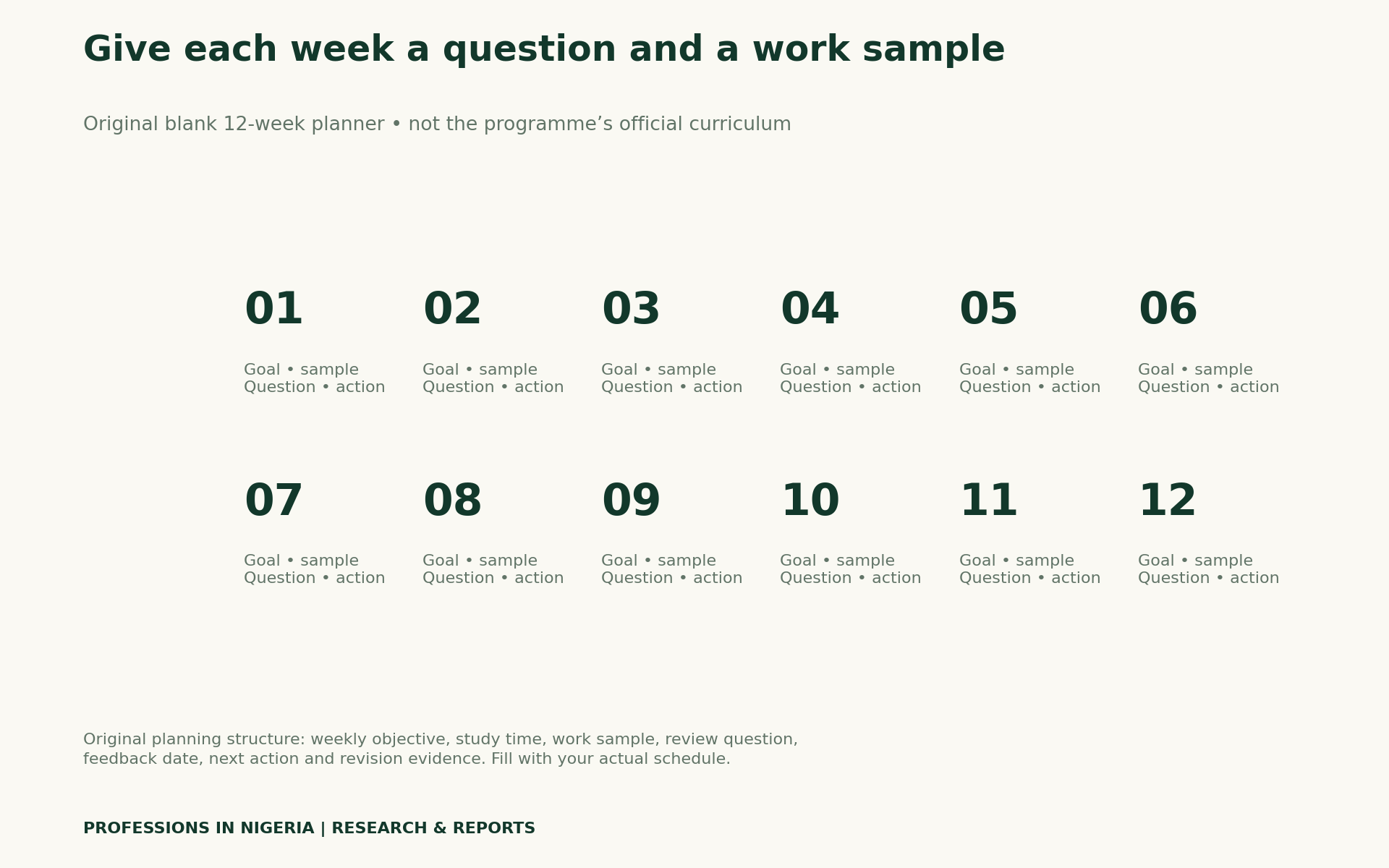
A useful objective is narrow enough to review. For example, a learner might practise explaining how one sample dataset was cleaned, or revise a short content draft for a stated audience. These are fictional task ideas, not official assignments. Choose a task that fits your actual training area and the permissions attached to any material you use.
Keep the work sample small. A mentor can respond more precisely to one labelled chart, a short draft or a focused explanation than to an unexplained folder of files. State what the sample is meant to do and where you are uncertain. Never upload confidential client information, private learner records or material you are not authorised to share.

Use a three-stage feedback request
First, clarify the problem. Describe the intended result and what you have already tried. Second, request feedback on an early attempt. Ask one question that a reviewer can answer from the sample. Third, explain the revision: what changed, why it changed and what still needs checking. This proposed structure is separate from the official curriculum.
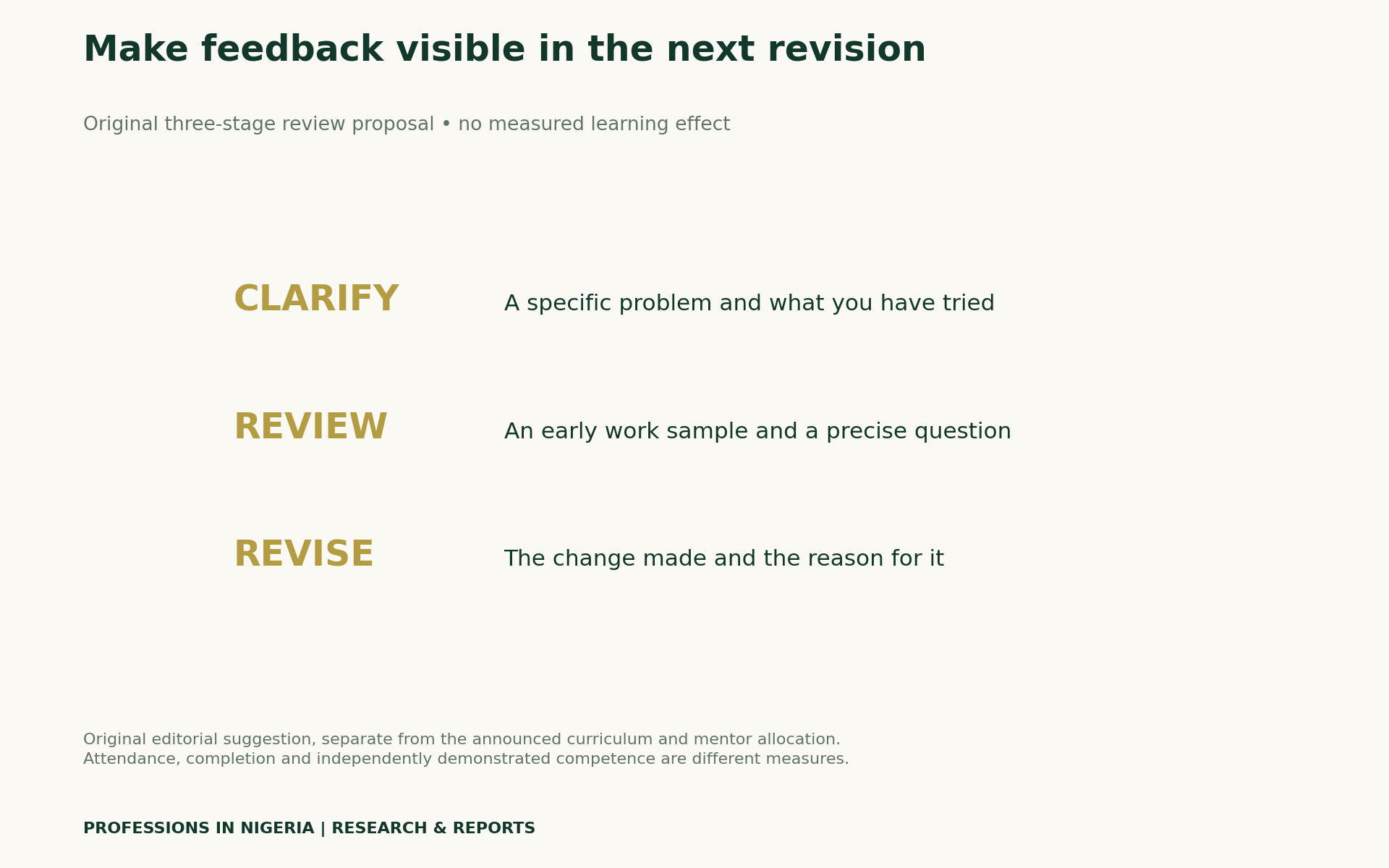
Here is a fictional request: “This sample chart is meant to compare two periods. I checked the units and used the same scale. Could you review whether my title and footnote explain the comparison clearly?” The learner can then record the feedback, revise the title and note any remaining issue. That is a concrete review record, not proof of a job-ready skill level.
Attendance, completion and independently demonstrated competence answer different questions. Being present establishes participation under the stated attendance definition. Completing required activities establishes completion under the programme’s rules. Demonstrating a capability requires suitable evidence and an assessment method. Do not relabel one measure as another or treat a completion credential as an automatic professional accreditation.
Plan learner costs using your own inputs
Free training does not define every cost a learner may face. The blank cost worksheet provides optional categories for transport, data, power and foregone work time. Enter your own quantities and prices if they apply. We have not measured local prices, established programme charges or recommended that learners buy any particular equipment.
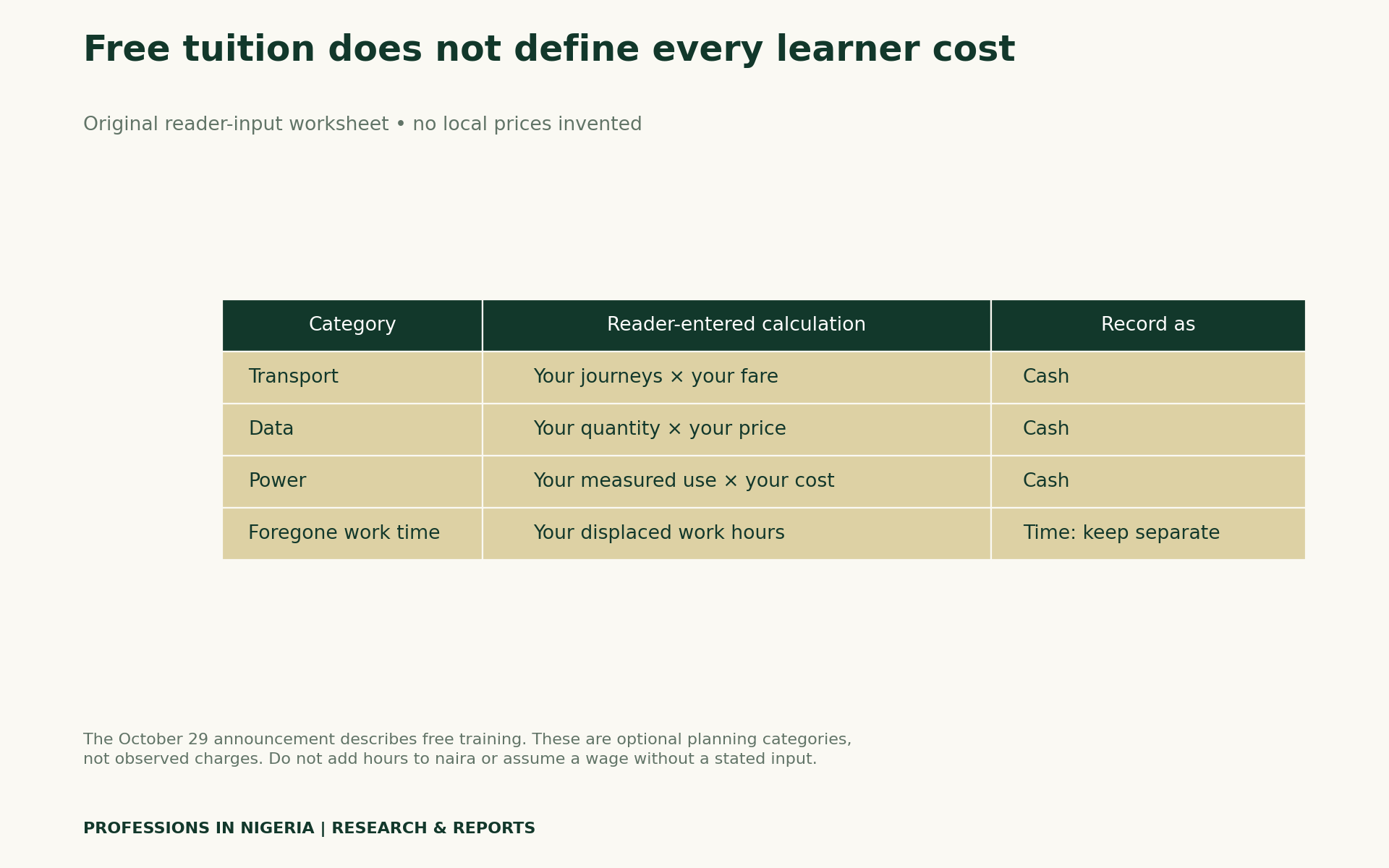
For a cash item, multiply your quantity by your unit cost over the same period. Keep hours separate from naira. If you choose to value displaced work, state the hourly assumption and explain why it fits your situation. Avoid counting the same expense twice or treating every study hour as a confirmed loss of paid work.
Before committing time, ask the organiser about the actual timetable, review route, available tools and what happens when a session is missed. Record answers as confirmed arrangements, not assumptions. Our training-to-evidence guide offers a separate example of turning learning into traceable practice without claiming that a certificate guarantees an outcome.
Download the figures and blank planning tools
Use the announced programme facts (CSV), hypothetical capacity inputs and results (CSV), blank 12-week learning planner (CSV), and blank learner-cost worksheet (CSV). The planner is an editorial resource, not an official programme document.
Research checked November 3, 2026. We retained the two primary announcements, reproduced the stated headcounts and verified the ratio and hypothetical multiplication. We did not infer equal ward allocations, actual contact hours, attendance, completion, earnings, placements or accreditation. The capacity example and planning tools are original proposals; their usefulness has not been evaluated as a programme intervention.
Suggested citation: Professions In Nigeria, “Biase BOLD’s 100 Learners and 20 Mentors: Plan Useful Feedback Across 12 Weeks,” November 3, 2026. Attribute announcement facts to the Cross River State Ministry of Information and identify the capacity illustration and blank tools as original editorial resources.


