




Maintaining Construction Quality and Compliance
Building inspectors help maintain construction quality and compliance across real estate projects.
They assess construction work against approved requirements and expected construction standards.
Their involvement also helps project teams address visible concerns during development.
Assessing Construction Work
Building inspectors assess construction work during relevant stages of development.
They examine whether completed work follows approved requirements and expected construction standards.
Furthermore, inspectors identify visible issues that may affect construction quality or compliance.
Supporting Compliance Across Projects
Inspectors help confirm that construction activities align with applicable requirements.
They review project work consistently instead of relying only on final appearances.
Therefore, their involvement encourages compliance throughout the construction process.
Identifying Issues Early
Regular inspections can reveal concerns before construction progresses further.
Inspectors communicate identified issues to the relevant project participants.
Consequently, project teams can address concerns before they affect additional work.
Encouraging Accountability
Building inspectors create an independent point of assessment within construction projects.
Their assessments encourage project participants to maintain attention to quality requirements.
Additionally, inspections promote accountability across the construction process.
Strengthening Communication
Inspectors communicate observations about construction quality and compliance.
Clear communication helps project participants understand areas requiring attention.
Moreover, it supports better coordination between inspection activities and construction work.
Supporting Consistent Standards
Inspectors help apply quality and compliance expectations consistently across construction projects.
This consistency supports clearer assessments of work within Nigeria’s real estate sector.
As a result, inspection contributes to a more orderly construction environment.
Contributing to Real Estate Confidence
Quality inspections support confidence in construction processes.
They show that project work receives attention beyond routine construction activity.
Ultimately, building inspectors reinforce the importance of quality and compliance in real estate development.
Identifying Structural Defects Through Building Inspections
Building inspections help identify structural defects that may threaten occupants.
Inspectors therefore assess a building’s structural condition and communicate important safety information.
These assessments help stakeholders understand structural conditions before making safety decisions.
Recognising Potential Structural Problems
Inspectors examine buildings to identify conditions that could indicate structural weakness.
They assess observed defects and consider their possible effects on building safety.
Additionally, inspections distinguish ordinary building concerns from issues requiring urgent attention.
This process gives property stakeholders clearer information about existing structural conditions.
Assessing Risks to Occupants
Structural defects can create safety concerns for people who use or occupy buildings.
Consequently, inspections reveal risks before unsafe conditions cause harm.
Inspectors communicate identified concerns so responsible parties understand potential dangers.
Furthermore, clear inspection findings support informed decisions about occupant safety.
Supporting Timely Safety Decisions
Early identification allows stakeholders to respond to structural concerns more effectively.
However, unexamined defects can remain unnoticed and continue affecting building safety.
Regular attention to structural conditions helps stakeholders monitor potential risks.
Thus, inspections support timely action when a building presents safety concerns.
Protecting People Through Clear Findings
Inspection findings help property stakeholders understand whether structural conditions require attention.
They also create a clearer basis for prioritising occupant protection.
Moreover, documented concerns improve communication between people responsible for building safety.
As a result, building inspections connect structural assessment with practical safety decisions.
Promoting Safer Occupancy
Building inspectors help protect occupants by identifying defects that may compromise safe use.
They focus attention on structural conditions rather than relying on appearance alone.
Therefore, inspections provide reassurance when buildings meet acceptable safety expectations.
Where concerns exist, inspections highlight the need for further attention before continued occupancy.
Inspection Across Property Development Stages
Building inspectors provide valuable oversight throughout property development.
Each inspection stage offers an opportunity to review progress before work advances.
This staged review helps participants understand progress at each point.
Reviewing Early Construction Work
Inspectors examine completed work during the early construction stage.
They compare visible progress with the approved development requirements.
Additionally, they identify discrepancies before subsequent work covers earlier elements.
This timing allows project participants to address concerns while access remains available.
Monitoring Ongoing Construction
Inspectors continue reviewing construction as the development progresses.
They assess whether the work follows the intended sequence and requirements.
Moreover, repeated inspections create opportunities to track corrections from earlier observations.
They also document the condition of reviewed work at different development stages.
Checking Installed Elements
Inspectors review installed elements before the project moves toward finishing activities.
They examine whether completed installations correspond with the planned development.
Furthermore, they note incomplete work that requires attention before further activities continue.
This review helps separate unfinished items from work ready for final assessment.
Assessing Finishing Work
Inspectors examine finishing work as the property approaches completion.
They review the completeness of visible areas.
They also record outstanding items that still require correction or completion.
Consequently, project participants gain a clearer picture of the remaining work.
Conducting the Completion Inspection
The completion inspection provides a final review of the developed property.
Inspectors assess whether completed work satisfies relevant development requirements.
They compare the final condition with the expected scope of work.
Additionally, they identify unresolved issues before the project reaches its final stage.
Supporting Clear Handover Decisions
Inspection findings help project participants understand the property’s completion status.
They provide a basis for reviewing outstanding work before handover.
Moreover, documented observations support clearer communication among the involved parties.
This process encourages participants to resolve identified issues before accepting completed work.
Maintaining Records Throughout Development
Inspectors create a continuing record of observations across development stages.
These records show when participants reviewed specific aspects of the work.
They also help track responses to observations made during earlier inspections.
Therefore, stage-by-stage documentation supports a more organized development process.
Delve into the Subject: How Facility Managers Ensure Efficient Operations in Nigeria
Supporting Regulatory Compliance
Building inspectors help ensure construction work follows applicable building regulations.
They review visible work and compare it with established regulatory requirements.
Additionally, inspectors identify differences that may require attention before construction progresses further.
Checking Approved Plans
Inspectors compare building work with approved plans for the property.
That comparison confirms whether construction reflects the authorised design.
Moreover, inspectors can identify changes that differ from approved plans.
They communicate those differences through the appropriate inspection process.
Supporting Safety Requirements
Inspectors assess whether construction work reflects required safety considerations.
Publish Your Professional Profile, Business or Brand
Showcase your expertise, gain trust, and boost visibility instantly on Professions.ng.
Publish NowThey examine relevant building elements against applicable safety requirements.
Consequently, inspections highlight conditions that may require correction.
Clear communication also helps participants understand safety expectations during property development.
Encouraging Responsible Decisions
Inspection findings give project participants useful information about compliance needs.
Therefore, developers and other responsible parties can address identified issues appropriately.
Inspectors encourage attention to regulatory requirements throughout the development process.
This support connects approved plans, building regulations, and safety requirements.
Creating Compliance Awareness
Regular communication with inspectors can improve understanding of applicable requirements.
Furthermore, inspections encourage participants to consider compliance before completing construction activities.
Building inspectors therefore link construction work with regulatory expectations.
Explore Further: The Role of Real Estate Agents in Nigeria’s Housing Market
Preventing Construction Failures and Reducing Repair Costs
Construction failures can increase repair demands and financial pressure for property owners and project participants.
Building inspectors help project teams identify concerns before those concerns affect additional building elements.
Timely observations help teams manage corrective work while construction remains underway.
Detecting Problems Before They Escalate
Building inspectors reveal construction problems before those problems develop into wider failures.
As a result, project teams can address concerns while corrective work remains manageable.
Early attention also limits the chance that unresolved issues will affect other building elements.
Supporting Timely Corrective Action
Inspectors provide observations that help responsible parties understand where construction work requires attention.
Therefore, project teams can focus corrective efforts on identified concerns instead of unexpected failures.
This approach supports more controlled decision-making throughout property development.
Reducing Future Repair Demands
Building inspections can reduce future repair demands by encouraging timely corrections during construction.
Consequently, property owners may prevent minor concerns from becoming extensive repair requirements.
Inspections also clarify which areas need attention before project completion.
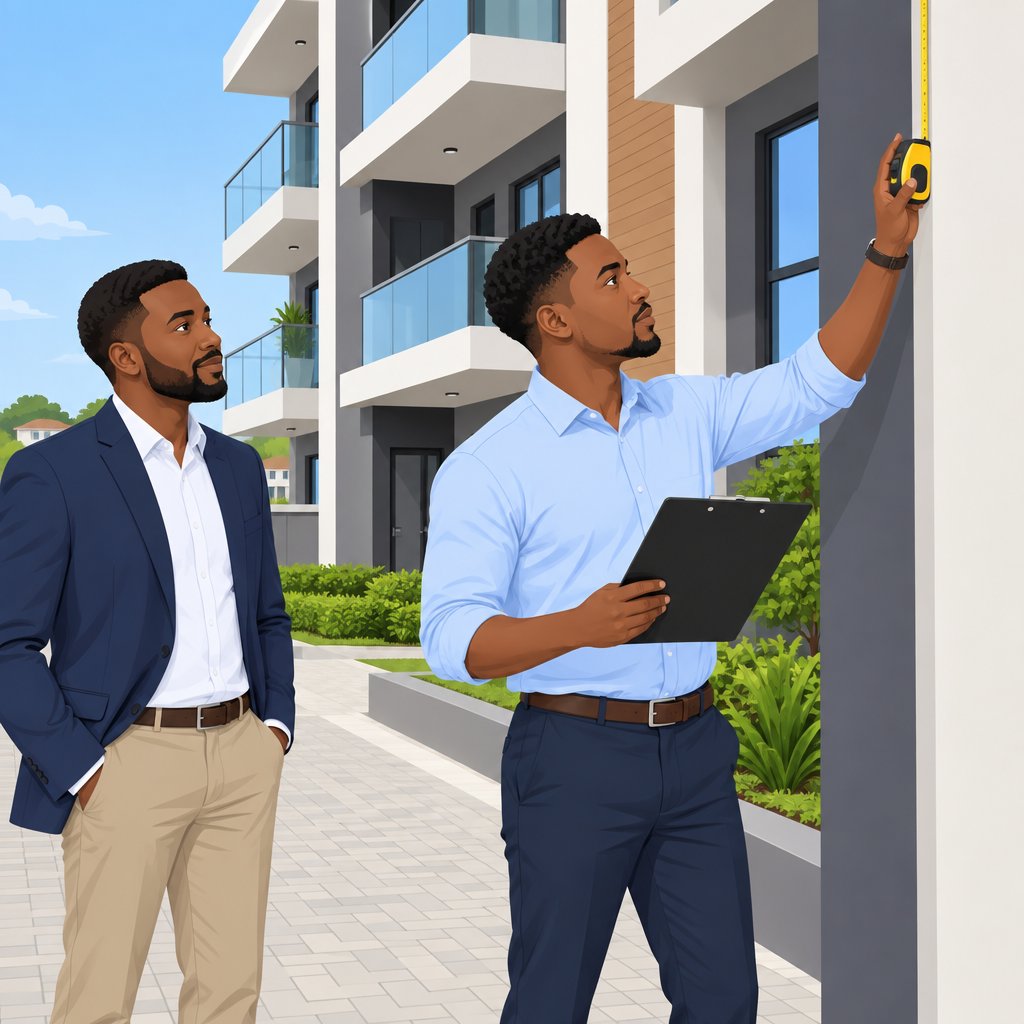
Protecting Project Investment
Construction failures can create additional repair responsibilities for property owners and other project participants.
However, building inspectors support preventive action that helps protect the value of completed work.
Moreover, their findings encourage project teams to resolve concerns before greater financial pressure develops.
Improving Long-Term Building Performance
Inspectors contribute to reliable construction by identifying work that may require correction.
As a result, completed buildings can better reflect the intended quality of their construction.
Furthermore, early corrective action supports continued confidence in the property’s condition.
Find Out More: The Role of Construction Managers in Nigeria’s Growing Economy
Why Inspection Reports Matter to Real Estate Stakeholders
Inspection reports convert inspection observations into clear information for people involved in property decisions.
Therefore, they help stakeholders review property conditions through a documented and consistent record.
This record gives stakeholders a consistent basis for reviewing inspection information.
Value for Property Developers
Developers can use inspection reports to understand work conditions at specific development stages.
Additionally, reports help developers organize responses to observations requiring attention.
They also support clearer communication among parties involved in the development process.
Furthermore, documented observations help developers track matters requiring review before proceeding.
Value for Property Buyers
Buyers can review inspection reports before deciding whether a property meets their expectations.
Reports provide buyers with information beyond the property’s visible appearance.
Consequently, buyers can ask more focused questions about the property under consideration.
They can also use reports to understand observations recorded during inspections.
Moreover, written reports give buyers references for future property discussions.
Value for Investors
Investors can use inspection reports when evaluating property opportunities.
The reports help investors consider documented property information alongside their investment requirements.
Additionally, reports support structured comparisons between properties under consideration.
They also help investors identify matters requiring further review before making decisions.
Therefore, inspection reports strengthen the information available during property assessment.
Value for Other Stakeholders
Other real estate stakeholders can use reports to understand relevant inspection findings.
For example, reports can improve communication among developers, buyers, investors, and other involved parties.
They create a shared reference for clearer discussions about recorded observations.
As a result, stakeholders can address questions using documented information rather than unclear impressions.
Supporting Clearer Property Decisions
Inspection reports do not replace stakeholder judgment.
Instead, they provide information for consideration during property-related decisions.
Reports can also clarify which matters deserve attention, discussion, or further assessment.
Furthermore, their written format makes inspection information easier to review later.
This value extends beyond one stakeholder because several parties may rely on the same report.
Creating a Reliable Record
An inspection report records observations associated with the property at inspection time.
Consequently, stakeholders can refer to the document when reviewing the property later.
The report also preserves important inspection information in an organized form.
Moreover, a clear record encourages transparent communication throughout the property process.
Ultimately, inspection reports help stakeholders approach real estate decisions with better documented information.
Learn More: How to Build a Career as a Quantity Surveyor in Nigeria
Accountability Across Nigeria’s Construction Industry
Building inspectors help define responsibility among construction participants.
They connect project decisions with accountable professional actions.
Furthermore, their documented observations support responsible communication and decision-making.
Creating Clear Responsibility
Building inspectors help clarify responsibility among parties involved in construction activities.
Therefore, their observations connect project decisions with accountable professional actions.
They can document concerns clearly and communicate them to relevant parties.
Supporting Transparent Processes
Consistent inspection practices help stakeholders understand how professional oversight operates.
Moreover, clear records reduce uncertainty about observations, discussions, and required responses.
Clear communication encourages stakeholders to address concerns through appropriate channels.
Encouraging Ethical Practice
Inspectors promote impartial judgment by focusing on observable conditions and documented requirements.
They should separate personal preferences from professional observations.
Likewise, they should communicate findings honestly, clearly, and respectfully.
Strengthening Professional Discipline
Regular oversight encourages construction participants to follow their agreed responsibilities.
It also reinforces careful planning, coordination, and record keeping.
As a result, professionals receive clearer expectations for responsible conduct.
Improving Industry Collaboration
Inspectors create structured opportunities for project participants to discuss concerns.
Consequently, shared discussions can reduce misunderstandings between construction professionals.
They also help participants distinguish technical observations from personal disagreements.
Building Public Confidence
Visible professional oversight can strengthen confidence in construction processes.
However, inspectors must explain their roles without overstating their authority.
This balanced approach supports realistic expectations among real estate stakeholders.
Supporting Continuous Improvement
Inspection experiences can reveal recurring weaknesses in processes and professional coordination.
Teams can then review their methods and improve future project practices.
Furthermore, inspectors can encourage lessons that strengthen accountability across Nigeria’s construction industry.
Over time, consistent reflection can support higher professional standards.
Publish Your Professional Profile, Business or Brand
Showcase your expertise, gain trust, and boost visibility instantly on Professions.ng.
Publish NowChallenges Affecting Building Inspection Practice
Several challenges can reduce the effectiveness of building inspection practice.
These challenges can affect consistency, capacity, coordination, documentation, and stakeholder cooperation.
Addressing these concerns can support clearer and more reliable inspection activities.
Inconsistent Inspection Processes
Building inspection practice can lose effectiveness when inspection processes lack consistency.
Therefore, inspectors need clear procedures for conducting assessments and recording observations.
Consistent processes also help stakeholders understand inspection expectations throughout property development.
Limited Operational Capacity
Inspection effectiveness can decline when available capacity does not match inspection responsibilities.
Consequently, inspectors may struggle to give sufficient attention to every required assessment.
Strengthening capacity can support more thorough and timely inspection activities.
Insufficient Coordination
Building inspection involves communication among inspectors, developers, contractors, property owners, and other stakeholders.
However, weak coordination can delay information sharing and complicate inspection decisions.
Improved communication can help stakeholders respond more effectively to inspection requirements.
Challenges With Documentation
Clear documentation allows inspectors to communicate observations and required actions effectively.
Nevertheless, incomplete or unclear records can reduce the usefulness of inspection information.
Standardized documentation can improve clarity, consistency, and accountability during inspection activities.
Stakeholder Cooperation
Inspectors require cooperation from relevant stakeholders to perform their responsibilities effectively.
Delays can occur when stakeholders provide incomplete information or restrict access to necessary areas.
Therefore, stakeholders should support inspection activities and respond appropriately to identified concerns.
Public Understanding of Inspection Value
Some stakeholders may view inspection as an administrative requirement rather than a protective process.
This perception can weaken cooperation and reduce attention to inspection findings.
Clear communication can explain the purpose of inspections without creating unnecessary confusion.
Strengthening Inspection Effectiveness
Inspection effectiveness depends on clear responsibilities, professional competence, independence, communication, and reliable records.
These elements can help stakeholders coordinate their actions throughout inspection activities.
Regular review can also reveal opportunities to improve inspection practice.
Clarifying Responsibilities
Clear responsibilities can help each stakeholder understand their role within the inspection process.
Inspectors should communicate required actions, while stakeholders should address relevant inspection concerns.
Consequently, defined responsibilities can reduce confusion and support more coordinated decisions.
Improving Professional Development
Ongoing professional development can help inspectors maintain relevant knowledge and practical competence.
It can also encourage consistent judgment when inspectors assess different property conditions.
Therefore, continued learning should remain an important part of strengthening inspection practice.
Supporting Inspector Independence
Inspection decisions should remain focused on observed conditions and applicable requirements.
Accordingly, inspectors need sufficient independence to communicate findings clearly and responsibly.
Independent judgment can strengthen confidence in inspection outcomes among real estate stakeholders.
Enhancing Communication
Effective communication helps inspectors present findings in language that stakeholders can understand.
Furthermore, clear explanations can help stakeholders identify appropriate responses to inspection concerns.
Timely communication can also reduce misunderstandings during property development and decision-making.
Strengthening Record Management
Organized records can help stakeholders review inspection activities and follow up on outstanding matters.
They can also support continuity when inspection processes involve multiple stages or participants.
Therefore, accurate record management should support every inspection activity.
Promoting Continuous Review
Building inspection practice should receive regular review to identify weaknesses and improvement opportunities.
Reviewing procedures can reveal where communication, documentation, or coordination needs strengthening.
As a result, continuous improvement can make inspection practice more responsive and effective.
Building a Stronger Inspection Culture
Strengthening inspection effectiveness requires cooperation across Nigeria’s real estate sector.
Inspectors, developers, contractors, owners, and other stakeholders must recognize their shared responsibilities.
When stakeholders support consistent inspections, they create stronger conditions for responsible property development.
Ultimately, effective inspection practice depends on clear processes, capable professionals, reliable records, and constructive cooperation.