



Understanding the Electrician Profession in Nigeria
An electrician performs electrical work within residential, commercial, and industrial environments.
The profession requires practical ability, careful judgment, and consistent attention to electrical responsibilities.
Additionally, electricians must understand how different work environments influence their duties.
Core Responsibilities
Electricians install, maintain, inspect, and repair electrical systems.
They identify electrical problems and determine suitable ways to address them.
They also connect electrical components according to each project’s requirements.
Furthermore, electricians test electrical systems to support reliable operation.
They organise their work carefully before beginning electrical tasks.
They also communicate clearly when explaining electrical work to others.
Common Work Environments
Electricians work in places that require electrical installation, maintenance, inspection, or repair.
Therefore, their daily responsibilities can change according to the building or facility.
Some electricians work in residential settings, while others serve commercial or industrial environments.
Each setting presents different electrical requirements and working conditions.
Consequently, electricians must adapt their approach without losing focus on careful workmanship.
Essential Qualities
A successful electrician develops practical skill through focused learning and repeated practice.
Carefulness helps electricians complete electrical tasks with greater control and accuracy.
Attention to detail enables them to notice important differences within electrical systems.
Problem-solving ability helps electricians respond to faults and changing work requirements.
Patience supports careful work, especially when electrical issues require closer examination.
Clear communication helps electricians understand instructions and explain their work effectively.
Responsibility encourages electricians to treat every electrical task with seriousness.
Moreover, adaptability helps them work across different electrical environments.
Residential Electrical Work
Residential electrical work focuses on electrical systems within homes and other living spaces.
Electricians working in this area address the specific requirements of individual households.
They may install, maintain, inspect, or repair electrical systems within residential properties.
Therefore, they must understand how household electrical needs differ from larger facilities.
Commercial Electrical Work
Commercial electrical work serves business premises and other commercial spaces.
These environments can require electrical work that supports organised business activities.
Commercial electricians adapt their responsibilities to each premises’ structure and requirements.
They must coordinate their work carefully within active commercial environments.
Industrial Electrical Work
Industrial electrical work serves industrial facilities and their electrical requirements.
This area can involve more extensive electrical systems than residential settings.
Industrial electricians must approach their responsibilities with strong organisation and attention to detail.
They also adapt their work to the demands of industrial environments.
Comparing the Three Areas
Residential work centres on homes, while commercial work serves business premises.
Industrial work focuses on industrial facilities and their electrical systems.
Although these areas share core electrical responsibilities, their environments differ significantly.
As a result, electricians should understand each setting before choosing their preferred direction.
This understanding helps them prepare for expectations associated with different electrical work.
Choosing an Educational Pathway
Aspiring electricians can choose vocational education, technical institutions, or supervised apprenticeship.
Each pathway offers a different structure for developing electrical knowledge and practical ability.
Therefore, consider your learning preferences before selecting a suitable option.
Vocational Education
Vocational education provides a structured setting for learning electrical concepts and developing practical skills.
It can suit learners who prefer guided instruction alongside applied learning.
Before enrolling, review the programme’s electrical content and learning expectations.
Also, confirm that the programme supports both theory and practical development.
Technical Institutions
Technical institutions offer another organised route into electrical training.
They can help learners study electrical theory within a formal educational environment.
Additionally, this pathway encourages consistent study and progressive skill development.
Choose an institution that gives electrical theory appropriate attention.
Furthermore, seek training that connects classroom learning with practical understanding.
Supervised Apprenticeship
Supervised apprenticeship allows learners to develop skills under guidance.
This pathway combines observation, instruction, and practical participation.
However, learners should choose supervision that supports careful learning and responsible practice.
Ask how the apprenticeship will develop electrical theory alongside practical experience.
Moreover, observe whether the learning process encourages questions and clear explanations.
Building a Strong Foundation in Electrical Theory
Electrical theory provides an essential foundation for practical electrical training.
Therefore, learners should study fundamental principles before relying heavily on practical activity.
Theory helps learners understand why electrical systems operate in particular ways.
It also supports more thoughtful decision-making during supervised learning.
Connecting Theory With Practice
Apply each theoretical lesson to relevant practical learning whenever possible.
This connection can make unfamiliar electrical ideas easier to understand.
Additionally, review theoretical concepts after practical sessions to strengthen understanding.
When confusion arises, ask an instructor or supervisor for clarification.
Comparing the Available Pathways
Compare each pathway according to its balance between theory, structure, and supervision.
Consider whether you learn best through formal instruction, practical guidance, or both.
Next, examine how each option supports steady progress in electrical learning.
Do not choose based only on convenience or immediate practical exposure.
Instead, select a pathway that supports both understanding and responsible skill development.
Creating a Personal Learning Routine
A consistent learning routine can support progress across any chosen pathway.
Set aside regular time for reviewing electrical theory and reflecting on practical lessons.
Keep unfamiliar concepts together for discussion with an instructor or supervisor.
Meanwhile, revisit earlier lessons before beginning more advanced electrical learning.
This approach helps maintain continuity between study, supervision, and practice.
Building Skills Through Apprenticeship
Apprenticeship turns electrical knowledge into supervised practical ability.
This process builds practical ability through guided work.
Therefore, choose an environment that supports steady learning and responsible practice.
Finding Suitable Supervision
Begin by seeking a supervisor who performs electrical work carefully and explains each task clearly.
Discuss the learning arrangement before starting any practical work.
Ask about expected duties, supervision, feedback, and opportunities to develop new skills.
Choose supervision that encourages questions and corrects mistakes constructively.
Also, observe how the supervisor approaches planning, safety, installation, and communication.
These observations can shape your understanding of professional electrical practice.
Starting With Basic Responsibilities
Begin with basic tasks that match your current level of understanding.
Watch each demonstration closely before attempting the task yourself.
Ask the supervisor to explain the purpose and sequence of each activity.
Then, complete the task while following the guidance provided.
Publish Your Professional Profile, Business or Brand
Showcase your expertise, gain trust, and boost visibility instantly on Professions.ng.
Publish NowInvite feedback immediately after finishing each assignment.
Use that feedback to improve accuracy, care, and confidence.
Progressing Toward Complex Installations
Increase responsibility only after demonstrating consistency with simpler work.
Progressive learning allows you to connect separate tasks into complete installations.
Before attempting complex work, review the required steps with your supervisor.
Confirm your understanding before beginning any unfamiliar activity.
Complete each stage carefully instead of rushing toward the final result.
When difficulties arise, pause and request guidance from your supervisor.
Never treat increased responsibility as permission to work without appropriate supervision.
Documenting Practical Experience
Create a clear record of the practical tasks you complete.
Record the type of work, your responsibilities, and the guidance received.
Note the skills you practiced during each assignment.
Also, describe problems you encountered and how you addressed them.
Review your records regularly to identify areas requiring further practice.
Use these notes when discussing your progress with your supervisor.
A consistent record also helps you track growing responsibility over time.
Developing Professional Work Habits
Arrive prepared and remain attentive throughout each practical assignment.
Follow instructions carefully and communicate whenever you feel uncertain.
Keep your work organized from the beginning of every task.
Handle responsibilities with patience, accuracy, and respect for others.
Complete assigned work before accepting additional responsibilities.
Receive corrections positively and apply them during future assignments.
Furthermore, protect your professional reputation through dependable conduct.
Strong work habits support technical growth and prepare you for greater independence.
Find Out More: What It Takes to Become a Skilled Auto Mechanic in Nigeria
Essential Technical Skills to Master
Strong technical skills help electricians understand electrical systems and perform tasks accurately.
Electricians use these skills during installation, maintenance, testing, and repair tasks.
Together, these abilities support accurate and organized electrical work.
Reading Wiring Diagrams
Learn to read wiring diagrams before beginning any installation or maintenance task.
Wiring diagrams show connections, components, pathways, and intended electrical flow.
Study each symbol, line, label, and connection to understand the diagram fully.
Then, compare the diagram with the physical system before handling any connection.
This practice helps you follow instructions accurately and reduces confusion during electrical work.
Installing Electrical Systems
Electrical installation requires careful planning, accurate connections, and consistent attention to system details.
First, understand the required arrangement before positioning or connecting system components.
Follow the wiring diagram while maintaining clear pathways and orderly connections.
Check every connection carefully before considering the installation complete.
Additionally, keep your work organized so you can inspect and maintain the system easily.
Maintaining Electrical Systems
Regular maintenance helps electricians identify developing problems before they affect system performance.
Inspect electrical systems methodically and observe unusual conditions during each maintenance task.
Review connections, wiring paths, and system components for visible signs of faults.
Next, record relevant findings so you can track maintenance work accurately.
Consistent maintenance improves your understanding of system behavior and supports dependable electrical work.
Testing Circuits
Testing circuits allows electricians to examine electrical conditions before, during, and after their work.
Use suitable testing instruments according to their intended purpose and operating instructions.
Test systematically instead of relying on assumptions about a circuit’s condition.
Compare test results with the expected circuit arrangement shown in the wiring diagram.
Furthermore, confirm each connection and circuit section before moving to another task.
Careful testing helps you detect irregularities and evaluate whether the system operates as intended.
Identifying Electrical Faults
Fault identification begins with careful observation and a clear understanding of the circuit arrangement.
Start by reviewing the wiring diagram and identifying the affected circuit section.
Then, examine connections, components, and wiring paths in a logical sequence.
Use testing results to narrow the possible source of the fault.
Avoid random adjustments because they can create confusion and obscure the original problem.
Instead, isolate each suspected area and compare its condition with the expected arrangement.
Finally, verify the repair by testing the circuit again.
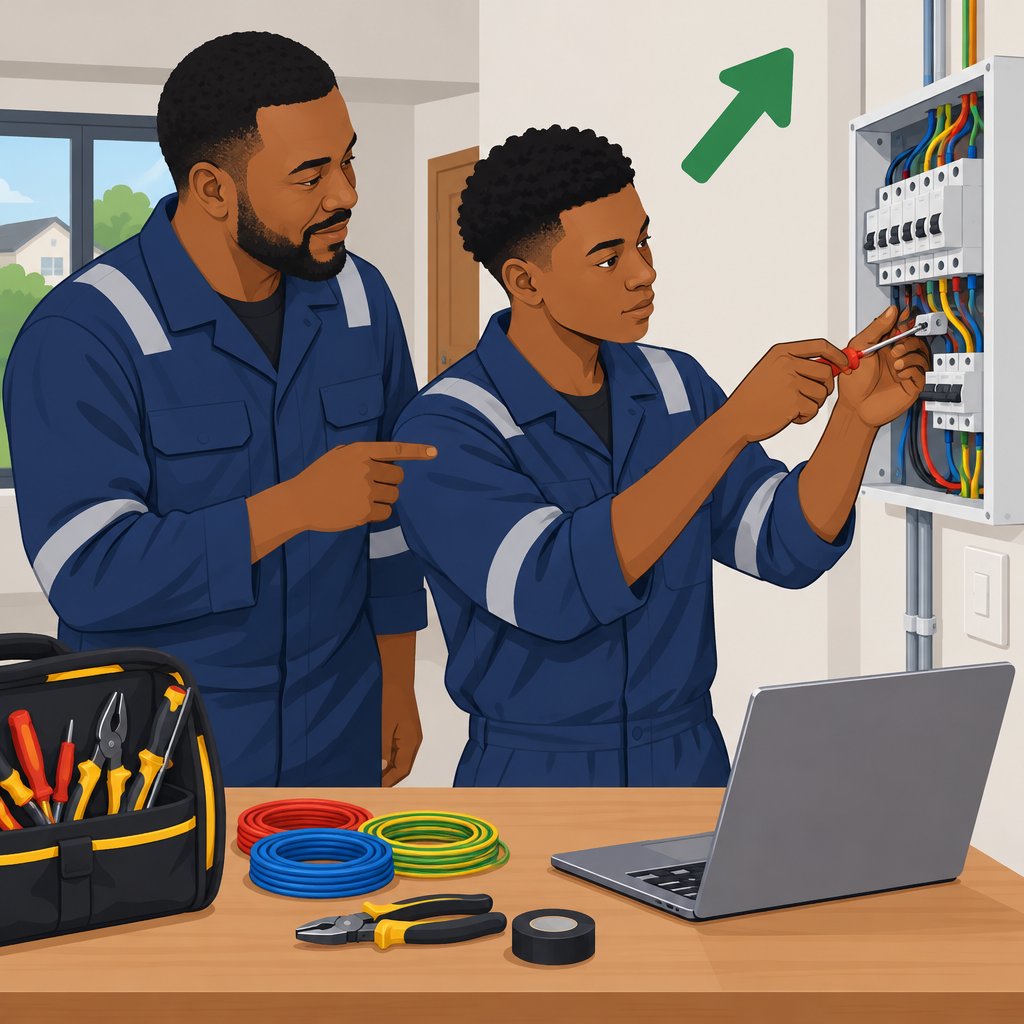
Using Electrical Tools Correctly
Electrical tools help electricians install, maintain, test, and repair systems effectively.
Learn the purpose of each tool before using it for electrical work.
Choose the appropriate tool for each task and handle it deliberately.
Inspect tools before use and keep them clean, orderly, and ready.
Use tools according to their intended function rather than forcing unsuitable equipment.
Additionally, maintain steady control to protect connections, components, and the surrounding work area.
Building Technical Accuracy
Practice each skill repeatedly until your actions become precise and consistent.
Combine diagram reading, installation, testing, fault identification, and tool use during practical exercises.
After each task, review your process and identify areas requiring improvement.
With continued practice, you can approach electrical work with greater clarity and control.
Explore Further: How to Succeed as a Professional Carpenter in Nigeria
Electrical Safety and Professional Standards
Electrical work demands careful attention to hazards, protective measures, and safe professional conduct.
Therefore, electricians must place safety before speed during every task.
Safety supports reliable electrical work from preparation through cleanup.
Recognising Electrical Hazards
Electrical hazards can cause shocks, fires, equipment damage, and serious injuries.
First, identify possible hazards before touching conductors, circuits, or connected equipment.
Look for exposed electrical parts, damaged insulation, unsecured connections, and unexpected power sources.
Also, consider hazards created by poor working conditions around the job site.
Maintain awareness throughout the task because conditions can change during electrical work.
When uncertainty exists, stop the work and seek proper supervision or guidance.
Using Protective Equipment
Protective equipment helps reduce exposure to electrical hazards during work.
Choose equipment that suits the task and provides appropriate protection.
Inspect protective equipment before use and remove damaged items from service.
Wear protective equipment consistently rather than treating it as an optional measure.
Additionally, keep protective equipment clean, accessible, and ready for future tasks.
Isolating Power Before Work
Always isolate power before working on electrical circuits or equipment.
First, identify the circuit or equipment that requires attention.
Then, disconnect the power source before beginning the work.
Prevent unexpected energisation while the task continues.
Confirm that the work area remains isolated before touching electrical parts.
Do not rely on assumptions about whether a circuit remains energised.
Publish Your Professional Profile, Business or Brand
Showcase your expertise, gain trust, and boost visibility instantly on Professions.ng.
Publish NowInstead, follow a clear isolation process and maintain control throughout the work.
Restore power only after completing the work and checking the area.
Preventing Electrical Shocks
Prevent shocks by combining power isolation, protective equipment, and disciplined work practices.
Keep hands, tools, and materials away from energised parts.
Never bypass a safety measure to save time during a task.
Maintain orderly working conditions so electrical parts remain clearly visible.
Furthermore, communicate the isolation status before another person enters the work area.
Clear communication helps prevent accidental contact and unexpected power restoration.
Reducing Fire Risks
Electrical faults can create conditions that lead to fires.
Therefore, inspect electrical work carefully before restoring power.
Check connections, insulation, and circuit condition before completing the task.
Keep combustible materials away from electrical work areas.
Remove unnecessary materials that could obstruct safe access or increase fire risk.
Stop work when you identify damaged electrical parts or unsafe conditions.
Address the hazard before continuing with any installation, repair, or maintenance activity.
Maintaining a Safe Job Site
A safe job site supports careful work and protects everyone nearby.
Keep the work area clean, organised, and free from avoidable obstructions.
Arrange materials so workers can move safely around the task.
Store protective equipment where workers can access it easily.
Separate completed work from unfinished work to prevent confusion.
Mark or communicate isolated areas before other people approach them.
Remove waste materials promptly after completing each stage of work.
Maintain safe access around electrical equipment throughout the job.
Applying Professional Safety Standards
Professional electricians follow safety procedures consistently, even during routine tasks.
They prepare before work, control hazards, and maintain attention until completion.
They also communicate clearly with supervisors, coworkers, and other people near the job.
Record relevant safety information when the work requires ongoing awareness.
Report unsafe conditions instead of ignoring or concealing them.
Review the work area before leaving and correct remaining safety concerns.
Finally, maintain the same safety standard during preparation, execution, and cleanup.
Uncover the Details: What You Need to Know About Becoming a Locksmith in Nigeria
Building Professional Credibility
Professional credibility grows when your qualifications, conduct, and workmanship demonstrate dependable electrical practice.
Therefore, treat every training record and completed assignment as part of your professional profile.
Consistent preparation and responsible conduct can strengthen confidence in your electrical services.
Pursuing Relevant Qualifications
Begin by pursuing qualifications that relate directly to electrical work.
Choose learning opportunities that strengthen your knowledge and support your intended responsibilities.
Additionally, confirm that each qualification reflects the skills you want to develop professionally.
Relevant qualifications can show clients and other professionals that you take electrical work seriously.
However, qualifications alone do not replace careful practice and continued improvement.
Instead, combine formal learning with disciplined application of your knowledge.
Maintaining Evidence of Training
Keep clear evidence of every completed course, assessment, and training activity.
Organize your records so you can present them when professional verification becomes necessary.
Include documents that demonstrate your qualifications and practical development.
Furthermore, update your records whenever you complete additional training.
Accurate documentation helps you explain your preparation with confidence.
It also supports a consistent professional identity as your experience develops.
Following Applicable Regulations
Identify the regulations that apply to your electrical activities.
Then, follow those requirements throughout planning, installation, maintenance, and repair work.
Regulations establish expectations that support responsible professional practice.
Therefore, avoid treating compliance as an optional part of electrical work.
Review applicable requirements regularly, especially when your responsibilities change.
When uncertainty arises, seek appropriate clarification before continuing the work.
Careful compliance protects your credibility and reinforces trust in your workmanship.
Developing Reliable Workmanship
Build your reputation by delivering reliable workmanship consistently.
Approach every assignment with attention, patience, and respect for professional requirements.
Complete each task carefully rather than allowing speed to reduce work quality.
Additionally, communicate clearly about the work you can perform.
Honest communication helps others form realistic expectations about your services.
Let your completed work demonstrate consistency across different assignments.
Over time, dependable results can strengthen your professional reputation.
Strengthening Professional Trust
Protect your reputation by matching your actions with your stated capabilities.
Keep your training evidence available when others request confirmation of your preparation.
Follow applicable regulations instead of relying only on personal judgment.
Moreover, continue improving your qualifications as your professional responsibilities expand.
These habits connect professional requirements with visible, reliable workmanship.
As a result, your credibility can grow through consistent preparation and responsible practice.
Explore Further: How to Build a Career as a Shoemaker in Nigeria
Starting and Sustaining an Electrical Career
An electrical career develops through suitable work, dependable service, and continuous improvement.
Therefore, manage employment, clients, estimates, materials, schedules, and records with care.
These practices help you sustain responsible electrical work in Nigeria.
Seeking Employment
Begin by identifying employment opportunities that match your current abilities.
Present your training, practical experience, and work records clearly.
Additionally, explain the electrical tasks you can perform confidently.
Show employers that you understand instructions and respect workplace procedures.
Remain open to roles that help you develop broader practical experience.
Furthermore, treat every application as an opportunity to communicate your professionalism.
Attracting Clients
Build client interest by describing your services in clear, simple language.
Explain the work you can complete without overstating your abilities.
Respond promptly when potential clients request information.
Ask questions that clarify the client’s electrical needs.
Then, confirm the requested work before discussing costs or scheduling.
Encourage satisfied clients to remember your reliable communication and workmanship.
However, never promise results that the agreed work cannot support.
Understanding Client Needs
Listen carefully before preparing an estimate or planning the work.
Record the client’s instructions accurately.
Clarify which tasks the client expects you to complete.
Also, identify details that could affect materials, time, or labour.
Publish Your Professional Profile, Business or Brand
Showcase your expertise, gain trust, and boost visibility instantly on Professions.ng.
Publish NowDiscuss uncertainties before starting the job.
This approach reduces misunderstandings and supports responsible decisions.
Estimating Jobs Responsibly
Prepare estimates from the work requirements you have confirmed.
Separate the expected material costs from your service charge.
Consider the time required for each agreed task.
Allow room for clarification when the work details remain incomplete.
Explain what the estimate includes before the client accepts it.
State any conditions that could change the original estimate.
Never reduce accuracy merely to make an estimate appear attractive.
Responsible estimates help clients make informed decisions.
Managing Materials Carefully
List the materials required before beginning the job.
Match each material to the agreed electrical work.
Check your materials before travelling to the work location.
Record materials purchased, used, returned, or left over.
Communicate promptly when material changes become necessary.
Obtain the client’s agreement before adding unplanned costs.
Careful material management limits waste and supports accurate records.
Managing Time Effectively
Plan your work around the tasks you have agreed to complete.
Set realistic expectations about when you can begin and finish.
Organise materials and information before work starts.
Prioritise tasks that affect later stages of the job.
Update the client when circumstances affect the agreed schedule.
Avoid accepting overlapping commitments that you cannot manage responsibly.
Consistent time management strengthens trust and supports sustainable work.
Communicating Clearly
Use direct language when discussing electrical work with clients.
Explain technical matters in terms the client can understand.
Confirm important agreements through written communication when appropriate.
Repeat key details to prevent different interpretations.
Tell the client when you need further information.
Discuss delays, changes, and additional requirements as soon as possible.
Professional communication protects both the client and the electrician.
Maintaining Work Records
Create a record for every job you accept.
Include the client’s instructions, agreed tasks, materials, costs, and dates.
Record changes made during the work.
Note payments received and amounts still outstanding.
Keep your records organised and easy to review.
Update them while details remain fresh.
Accurate records help you track commitments and explain completed work.
Reviewing Completed Jobs
Review each job after completing the agreed tasks.
Compare the finished work with the original instructions.
Check whether you recorded material changes and client communications.
Identify problems in your estimating, scheduling, or record keeping.
Use those observations to improve your next job.
Regular review supports steady professional growth.
Building Sustainable Work Habits
Accept work that matches your abilities and available time.
Communicate honestly when a request exceeds your current capacity.
Protect your reputation through dependable service and accurate information.
Maintain organised records as your workload increases.
Continue refining how you estimate, plan, communicate, and follow up.
These habits help you sustain an electrical career in Nigeria.
Growing Through Continued Learning
Electrical work continues to demand curiosity, discipline, and a willingness to improve.
Therefore, keep developing your knowledge after completing initial training.
Review your previous work and identify areas that require stronger understanding.
Then, seek learning opportunities that address those specific needs.
Continued learning helps you approach electrical tasks with greater confidence and precision.
It also encourages you to remain adaptable as work requirements change.
Strengthening Professional Knowledge
Set personal learning goals that support your current responsibilities and future ambitions.
Record useful lessons from completed tasks and apply them to future work.
Additionally, discuss difficult situations with experienced professionals whenever appropriate.
This process turns everyday experience into steady professional development.
Specializing in Areas of Interest
As your experience grows, identify electrical areas that genuinely interest you.
Specialization allows you to focus your learning and deepen your practical ability.
First, compare your interests with the type of work you perform regularly.
Next, build knowledge and experience within your chosen area.
Focused development can help you deliver more consistent work within that specialty.
Choosing a Direction
Consider which tasks encourage your strongest concentration and commitment.
Also, evaluate the skills you want to strengthen over time.
However, remain open to learning beyond one specialty when opportunities require flexibility.
A balanced approach can preserve adaptability while supporting deeper expertise.
Adopting New Electrical Technologies
New electrical technologies can change how professionals understand, install, and maintain systems.
Therefore, follow developments that relate to your responsibilities and interests.
Learn how emerging technologies function before applying them during electrical work.
Seek proper understanding instead of relying on assumptions or incomplete information.
Furthermore, connect new knowledge with the electrical principles you already understand.
Remaining Adaptable
Adapting to change requires patience, attention, and a commitment to continued learning.
When you encounter unfamiliar technology, study its purpose and operating requirements.
Then, assess how it may influence your future work.
This mindset helps you remain prepared as electrical practices continue developing.
Mentoring Others in the Trade
Experienced electricians can strengthen the trade by guiding people who are still developing.
Mentoring allows you to share practical lessons gained through training and experience.
Begin by explaining tasks clearly and demonstrating the reasoning behind each step.
Encourage learners to ask questions and reflect on their progress.
Additionally, provide feedback that identifies strengths and supports improvement.
Building Future Capability
Good mentoring requires patience, consistency, and respect for the learner’s development.
Assign responsibilities that match the learner’s current understanding and readiness.
Gradually increase expectations as the learner demonstrates stronger judgment and ability.
This approach supports safer learning and encourages professional confidence.
Publish Your Professional Profile, Business or Brand
Showcase your expertise, gain trust, and boost visibility instantly on Professions.ng.
Publish NowExpanding from Technician to Business Owner
Long-term growth may lead you beyond technical work toward business ownership.
First, consider how your practical experience can support wider professional responsibilities.
Business ownership requires you to manage work while guiding the direction of your services.
Therefore, strengthen your decision-making, organization, communication, and leadership abilities.
Developing an Owner’s Mindset
Plan each responsibility carefully and keep your business activities organized.
Continue protecting the quality and reliability that built your professional reputation.
Also, review your progress and adjust your approach when circumstances change.
Strong technical ability remains valuable, but sustainable growth requires broader responsibility.
By combining technical development with leadership, you can create a stronger long-term path.