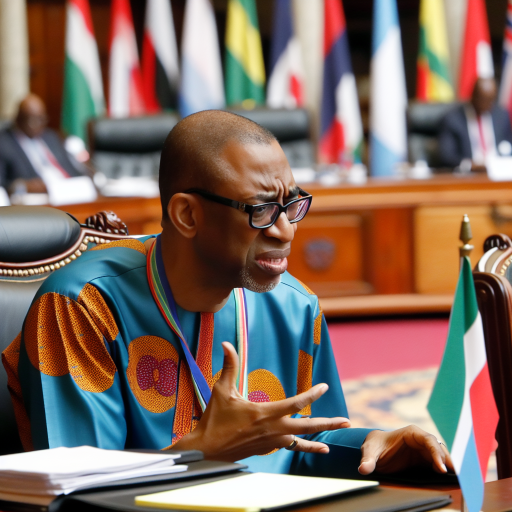




Definition and Role of Administrative Officers in Nigerian Government Agencies
Understanding Administrative Officers
Administrative Officers are essential professionals in government operations.
They manage day-to-day activities within various agencies.
Moreover, they ensure smooth coordination between departments and staff.
For instance, Mrs. Rahila Okonkwo leads administrative tasks at Lagos State Ministry of Health.
Her role supports decision-making and policy implementation effectively.
Key Responsibilities of Administrative Officers
Administrative Officers handle a wide range of duties crucial to agency success.
These duties include managing office communications and arranging meetings.
They also oversee document preparation and report compilation.
Additionally, they supervise office supplies and budgeting processes.
Furthermore, they maintain records and ensure compliance with regulations.
Impact of Administrative Officers on Government Efficiency
Administrative Officers play a critical role in enhancing operational efficiency.
They streamline workflows and reduce bureaucratic delays.
Consequently, agencies can deliver public services more effectively.
For example, Mr. Emeka Okeke at the Federal Ministry of Education improved internal processes.
His efforts resulted in faster response times and better staff coordination.
Supporting Leadership and Staff in Government Agencies
Administrative Officers assist senior officials by managing schedules and correspondence.
They serve as a liaison between leadership and different departments.
Moreover, they provide crucial support during strategic planning sessions.
This support helps managers focus on policy and program development.
As a result, they contribute significantly to achieving agency goals.
Overview of the Organizational Structure in Nigerian Government
Hierarchy and Main Components
The Nigerian government operates through a structured hierarchy.
Federal ministries sit at the apex and handle national policies.
Departments and agencies below ministries perform specific functions.
These agencies include regulatory bodies and service-oriented organizations.
This structure fosters specialization and efficiency across sectors.
Roles Within Government Agencies
Government agencies consist of diverse roles dedicated to public service delivery.
Functions range from policy formulation to operational execution.
Managers establish objectives and oversee strategic implementation.
Technical experts contribute specialized knowledge and support.
Administrative Officers handle daily activities to keep agencies functional.
Placement and Importance of Administrative Officers
Administrative Officers hold vital positions within government agencies.
They coordinate workflows, manage communication, and allocate resources.
Ensuring smooth office operations allows staff to focus on core tasks.
They often act as a link between management and employees.
This role makes them indispensable for organizational efficiency and accountability.
Key Responsibilities and Daily Functions of Administrative Officers within Government Institutions
Managing Communication and Correspondence
Administrative officers coordinate internal communications effectively.
They also manage external communications with stakeholders.
They draft official documents every day.
Moreover, they review and distribute these documents promptly.
The officers ensure timely responses to inquiries from various stakeholders.
Additionally, they liaise with departments such as the Ministry of Finance.
They also coordinate communication with the Project Coordination Unit.
Organizing and Coordinating Meetings
Administrative officers schedule meetings diligently.
They prepare relevant materials ahead of time.
This preparation includes setting detailed agendas.
They record minutes carefully to ensure accuracy.
Furthermore, they facilitate communication between senior officials.
For example, they coordinate with Mrs. Esther Adeyemi and other departments.
The officers ensure meetings run smoothly and efficiently.
They also guarantee that all decisions are documented correctly.
Maintaining Records and Documentation
Administrative officers handle confidential files with extreme care.
They update records regularly for easy retrieval.
This process supports audits and reviews efficiently.
Additionally, they manage both physical and electronic filing systems.
Their meticulous approach preserves data integrity within agencies.
For instance, they support the Lagos State Civil Service diligently.
Supporting Financial and Procurement Processes
Officers assist in budget preparation by gathering necessary documents.
They also help process purchase requisitions efficiently.
Monitoring expenditures closely falls under their responsibilities.
They coordinate with suppliers to ensure timely delivery.
The officers ensure compliance with procurement policies.
This support enables smooth workflows in agencies.
An example includes assistance provided to the Federal Ministry of Health.
Facilitating Human Resource Functions
Administrative officers maintain employee records accurately.
They monitor staff attendance and punctuality regularly.
These officers assist with recruitment by organizing interviews.
They also prepare necessary recruitment documentation promptly.
Moreover, they support staff training sessions effectively.
They maintain records of staff development and progress.
Their efforts strengthen workforce management within institutions.
An example institution they support is the Kano State Water Board.
Ensuring Compliance and Reporting
Administrative officers monitor adherence to government regulations closely.
They also enforce agency policies consistently.
These officers prepare operational activity reports for management reviews.
Furthermore, they track important deadlines for submissions.
They follow up promptly to avoid delays.
This vigilance helps maintain transparency within public service.
It also upholds accountability across government agencies.
Uncover the Details: The Role of Budget Analysts in Nigeria’s Government Spending
Ensuring Clear and Efficient Communication
Central Role in Information Flow
Administrative officers act as the main link between departments and stakeholders.
They gather essential information accurately.
Officers interpret and disseminate this information clearly.
Consequently, they prevent misunderstandings and errors in communication.
For instance, Amina Olufemi works at the Lagos State Ministry.
She coordinates daily reports efficiently.
Facilitating Timely Responses
These officers ensure urgent messages reach the right people quickly.
This enables decision-makers to react promptly to emerging issues.
Publish Your Professional Profile, Business or Brand
Showcase your expertise, gain trust, and boost visibility instantly on Professions.ng.
Publish NowMoreover, officers monitor communication channels to avoid delays.
At the Federal Ministry of Health, Ibrahim Adamu oversees critical updates.
He handles public health policy communications effectively.
Enhancing Coordination Across Departments
Bridging Diverse Units
Administrative officers connect various sections within government agencies.
This linkage fosters collaboration towards shared goals.
By connecting units, they reduce duplication of efforts.
They also help prevent resource waste.
For example, Blessing Eze coordinates between finance and procurement divisions.
She works at the Enugu State Secretariat.
Organizing Meetings and Workshops
Administrative officers arrange regular gatherings for teams.
These meetings synchronize activities and priorities.
Such events cultivate a sense of unity and shared understanding.
Additionally, officers prepare agendas and document key discussions.
At the Kaduna State Environmental Agency, Emeka Okoro manages these meetings.
He ensures seamless organization of stakeholder events.
Supporting Leadership and Administrative Functions
Assisting in Policy Implementation
Administrative officers translate leadership decisions into actionable tasks.
They communicate guidelines clearly to relevant staff and units.
This support guarantees effective policy execution across departments.
For instance, Nneka Chukwu monitors policy rollouts diligently.
She works at the Anambra State Bureau of Public Service.
Managing Inter-Agency Projects
Officers coordinate efforts when multiple government bodies collaborate.
This coordination ensures smooth progress and efficient resource sharing.
They track timelines, deliverables, and communication channels closely.
Femi Olaniyi played a vital role in coordinating education reform initiatives.
He contributed to national-level project success.
Delve into the Subject: How Public Relations Officers Shape Nigeria’s Government Image
Contribution of Administrative Officers to Policy Implementation and Monitoring
Facilitating Effective Policy Execution
Administrative officers ensure government policies are translated into actionable plans.
They coordinate between departments to align objectives with policy goals.
Moreover, they organize resources to support successful implementation.
For instance, Mrs. Kemi Alade from Lagos State Ministry played a key role in synchronizing efforts during policy rollouts.
Therefore, these officers act as the backbone of operational success.
Monitoring Compliance and Progress
Administrative officers track the progress of policy implementation regularly.
They collect data to evaluate whether agencies meet established standards.
In addition, they identify challenges early to prompt timely corrective action.
Mr. Chike Obi, an administrative officer at Abuja Public Works, exemplifies effective monitoring practices.
Consequently, their vigilance ensures transparency and accountability within agencies.
Reporting and Feedback Management
Administrative officers compile detailed reports on policy outcomes.
These reports inform government leaders about successes and areas needing improvement.
Additionally, they facilitate communication between stakeholders and policymakers.
For example, Ms. Amina Suleiman at the Ministry of Health coordinates feedback from multiple departments.
Thus, officers bridge the gap between implementation sites and decision makers.
Support in Capacity Building and Training
Administrative officers organize training sessions to enhance staff capability.
They ensure employees understand policy requirements and implementation procedures.
Furthermore, they foster continuous learning to adapt to evolving policy landscapes.
Mr. Emeka Okonkwo, working with the Federal Ministry of Education, leads workshops that improve policy adherence.
Therefore, their role in capacity building strengthens overall agency performance.
Key Responsibilities in Policy Implementation
- Coordinating interdepartmental communication
- Allocating and managing necessary resources
- Monitoring timelines and milestones
- Conducting periodic evaluations
- Preparing comprehensive progress reports
- Facilitating stakeholder engagement
Learn More: What It Takes to Build a Career as a Legislative Aide in Nigeria
Role of Administrative Officers in Resource Management and Allocation
Efficient Utilization of Government Resources
Administrative officers ensure that government resources are used efficiently.
They oversee budgets to prevent waste and misuse.
Their efforts help agencies meet objectives effectively.
Additionally, officers monitor procurement processes for transparency.
This vigilance prevents corruption and promotes accountability.
Strategic Planning and Budget Allocation
Administrative officers collaborate with finance teams to design strategic budgets.
They assess departmental needs to allocate funds wisely.
Detailed planning ensures priority projects receive adequate support.
Such strategies minimize resource shortages and operational delays.
Consequently, government agencies function smoothly and achieve targets.
Inventory and Asset Management
Administrative officers manage inventories of equipment and supplies.
They implement tracking systems to maintain accurate records.
Effective oversight prevents loss, theft, or underutilization of assets.
Regular audits identify discrepancies promptly.
Thus, agencies maintain full control over physical resources.
Coordination of Resource Distribution
Administrative officers coordinate resource distribution across departments.
They prioritize urgent needs while maintaining fair allocation principles.
Collaboration with project managers ensures timely resource delivery.
Additionally, officers adapt to changing demands by reallocating resources efficiently.
This flexibility supports dynamic government operations and responses.
Enhancing Accountability through Reporting
Administrative officers prepare detailed reports on resource usage.
These reports provide insights for senior management to evaluate performance.
Transparency in reporting builds trust among stakeholders and the public.
Furthermore, proper documentation aids future budgeting and planning.
Therefore, administrative officers play a crucial role in fiscal responsibility.
Find Out More: The Importance of Diplomats in Nigeria’s Foreign Relations

Impact of Administrative Officers on Enhancing Transparency and Accountability in Government Operations
Streamlining Information Management
Administrative officers organize key documents efficiently within government agencies.
This organization ensures information is readily accessible to authorized personnel.
Consequently, it reduces delays and errors in government correspondence.
Moreover, clear records support public inquiries and audits.
For instance, Ngozi Emeka, an administrative officer at Lagos State Ministry, improved document retrieval times significantly.
Facilitating Clear Communication Channels
Administrative officers act as bridges between departments and the public.
They ensure official communications remain transparent and accurate.
As a result, misunderstandings and misinformation decrease within government operations.
Additionally, officers like Chinedu Okafor coordinate timely dissemination of reports to stakeholders.
Implementing Accountability Mechanisms
These officers monitor compliance with internal policies and regulations.
They maintain logs of decisions and actions taken by officials.
This continual tracking supports accountability in public service delivery.
Furthermore, administrative officers help prepare audit reports for agencies such as the National Water Resources Institute.
Promoting Ethical Practices Through Oversight
Administrative officers identify and report irregularities in administrative processes.
Publish Your Professional Profile, Business or Brand
Showcase your expertise, gain trust, and boost visibility instantly on Professions.ng.
Publish NowTheir vigilance discourages corruption and promotes ethical conduct.
By enforcing adherence to procedures, officers foster trust in government institutions.
For example, Fatima Abdullahi from Kano State Ministry successfully flagged procurement violations last year.
Leveraging Technology for Transparency
Administrative officers introduce digital tools to track approvals and expenditures.
These technologies increase visibility of government transactions to the public.
Thus, digital records reduce opportunities for fraud and mismanagement.
Emmanuel Uche, an IT-savvy officer in Abuja Municipal Council, spearheaded such a digital transformation.
Supporting Citizen Engagement and Feedback
Administrative officers manage platforms for citizen complaints and suggestions.
They ensure feedback reaches relevant departments for prompt action.
This responsiveness enhances accountability and public confidence.
Moreover, Maryam Yusuf coordinates community outreach programs to gather grassroots input.
Challenges Faced by Administrative Officers
Managing Limited Resources
Administrative officers in Nigeria often face scarcity of essential resources.
They must operate within tight budget constraints imposed by government agencies.
Consequently, they prioritize tasks to optimize available resources effectively.
Moreover, they negotiate for additional support to meet operational needs.
Navigating Bureaucratic Complexities
Working within complex government systems presents significant hurdles.
Officers encounter overlapping regulations and lengthy approval processes regularly.
These challenges slow down decision-making and affect service delivery.
Therefore, they develop expertise in protocol to navigate bureaucratic layers efficiently.
Handling Diverse Stakeholder Expectations
Administrative officers deal with demands from various internal and external stakeholders.
They must balance expectations from politicians, employees, and the public.
This balancing act requires strong communication and negotiation skills.
Additionally, they strive to maintain transparency and build trust among all parties.
Adapting to Technological Changes
Frequent updates in technology can disrupt established administrative procedures.
Officers must quickly learn and implement new software and digital tools.
This adaptation ensures agencies remain efficient and responsive to citizens.
Furthermore, they train colleagues to embrace technology for smoother transitions.
Strategies for Overcoming Challenges
Implementing Effective Resource Management
Officers like Halima Bello use data-driven budgeting to maximize resource use.
They also engage in continuous monitoring to prevent wastage and inefficiency.
Collaborating with partners allows access to supplementary resources and expertise.
- Seeking grants and donations from development agencies
- Prioritizing high-impact projects for funding
- Streamlining procurement processes for cost savings
Enhancing Bureaucratic Navigation Skills
Chinedu Eze recommends building strong inter-departmental relationships.
This helps expedite approvals and smooth coordination across agencies.
Training workshops improve understanding of government policies and procedures.
Also, adopting more flexible approaches within regulatory limits fosters agility.
Strengthening Stakeholder Engagement
Oluchi Nwafor emphasizes open communication channels with all stakeholders.
Regular feedback sessions help identify and address concerns promptly.
They also use public information campaigns to clarify agency roles and decisions.
Building networks with community leaders enhances collaboration and support.
Promoting Continuous Technological Learning
Administrative officers lead by example in embracing digital innovation.
They organize training sessions for staff to improve IT proficiency.
Partnering with tech firms like Abuja-based CodeWaves Technologies provides tailored solutions.
Moreover, establishing dedicated IT support units ensures quick problem solving.
Significance of Administrative Officers in Fostering Inter-Departmental Collaboration
Facilitating Effective Communication
Administrative officers play a critical role in ensuring smooth communication between departments.
They coordinate meetings and relay information clearly to all relevant parties.
Consequently, misunderstandings decrease and workflow improves across various units.
Moreover, officers like Chinedu Okafor often use digital tools to streamline conversations efficiently.
Coordinating Joint Initiatives
These officers organize collaborative projects involving multiple departments.
For example, Ngozi Adesanya successfully managed a health awareness campaign engaging three ministries.
By scheduling timelines and tracking progress, they ensure that goals are met on time.
Therefore, administrative officers act as linchpins binding departments to a common purpose.
Resolving Conflicts and Enhancing Synergy
Conflicts often arise when departments have overlapping responsibilities.
Administrative officers mediate such disputes by facilitating open dialogue.
Through negotiations, they foster mutual understanding and cooperation.
This approach promotes a positive working environment and collective problem-solving.
Maintaining Transparency and Accountability
Administrative officers maintain detailed records of inter-departmental communications and decisions.
Olufunke Balogun ensures transparency by documenting approvals and task assignments.
As a result, accountability improves and all parties remain informed of their roles.
This process builds trust and enhances cooperation between government bodies.
Supporting Leadership in Coordination Efforts
These officers assist senior leaders in synchronizing activities across departments.
They prepare reports and summarize feedback for the Director-General, Amina Suleiman.
Such support enables top management to make well-informed decisions quickly.
Ultimately, administrative officers strengthen organizational unity and efficiency.
Supporting Data Collection and Analysis
Administrative officers gather vital data from various government departments.
They ensure accuracy by verifying information before submission.
Consequently, decision-makers receive reliable and up-to-date information.
Furthermore, they organize reports that highlight key performance indicators.
Through detailed analysis, officers identify trends and potential issues.
They collaborate with analysts like Mrs. Chiamaka Eze to improve data quality.
Facilitating Communication Between Departments
Administrative officers act as liaisons among government agencies.
They ensure smooth information flow between ministries and local offices.
Moreover, they schedule meetings that promote cross-department collaboration.
Effective communication aids officials such as Mr. Olutayo Balogun in making informed choices.
Additionally, officers prepare briefing materials to clarify complex topics for leaders.
Coordinating Policy Implementation
Administrative officers track the progress of new government policies.
They coordinate with teams to align activities with agency goals.
By monitoring implementation, officers help identify bottlenecks early.
This role supports executives like Dr. Amina Yusuf in adjusting strategies promptly.
Regular updates from administrative officers keep all stakeholders informed.
Managing Resources Efficiently
Resource management is a critical task for administrative officers.
They oversee budgets to ensure prudent use of government funds.
Additionally, officers manage human resources to optimize staff deployment.
For example, Mrs. Funke Adeola coordinates personnel assignments across departments.
Proper resource management directly influences the effectiveness of policies.
Providing Administrative Support for Decision-Making
Administrative officers prepare documents required for governmental meetings.
They handle scheduling and logistics for high-level decision forums.
Officers like Mr. Ifeanyi Okoro facilitate timely access to briefing papers.
This support enables policymakers to focus on strategic considerations.
Publish Your Professional Profile, Business or Brand
Showcase your expertise, gain trust, and boost visibility instantly on Professions.ng.
Publish NowFurthermore, they maintain records to track previous decisions and outcomes.
Enhancing Transparency and Accountability
Administrative officers maintain detailed records of government activities.
They ensure documentation is accessible for audits and public review.
Such transparency helps officials like Ms. Ngozi Amadi uphold integrity.
Moreover, officers assist in preparing reports that demonstrate agency performance.
This accountability fosters public trust in government operations.
Additional Resources
U.S. Security Cooperation with Nigeria – United States Department …