




AI workplace skills in Nigeria should include the judgement needed before an assisted draft reaches a client. A polished paragraph can still contain an unsupported claim, the wrong local reference or a private detail that should never leave the business. A useful portfolio makes those checks visible.
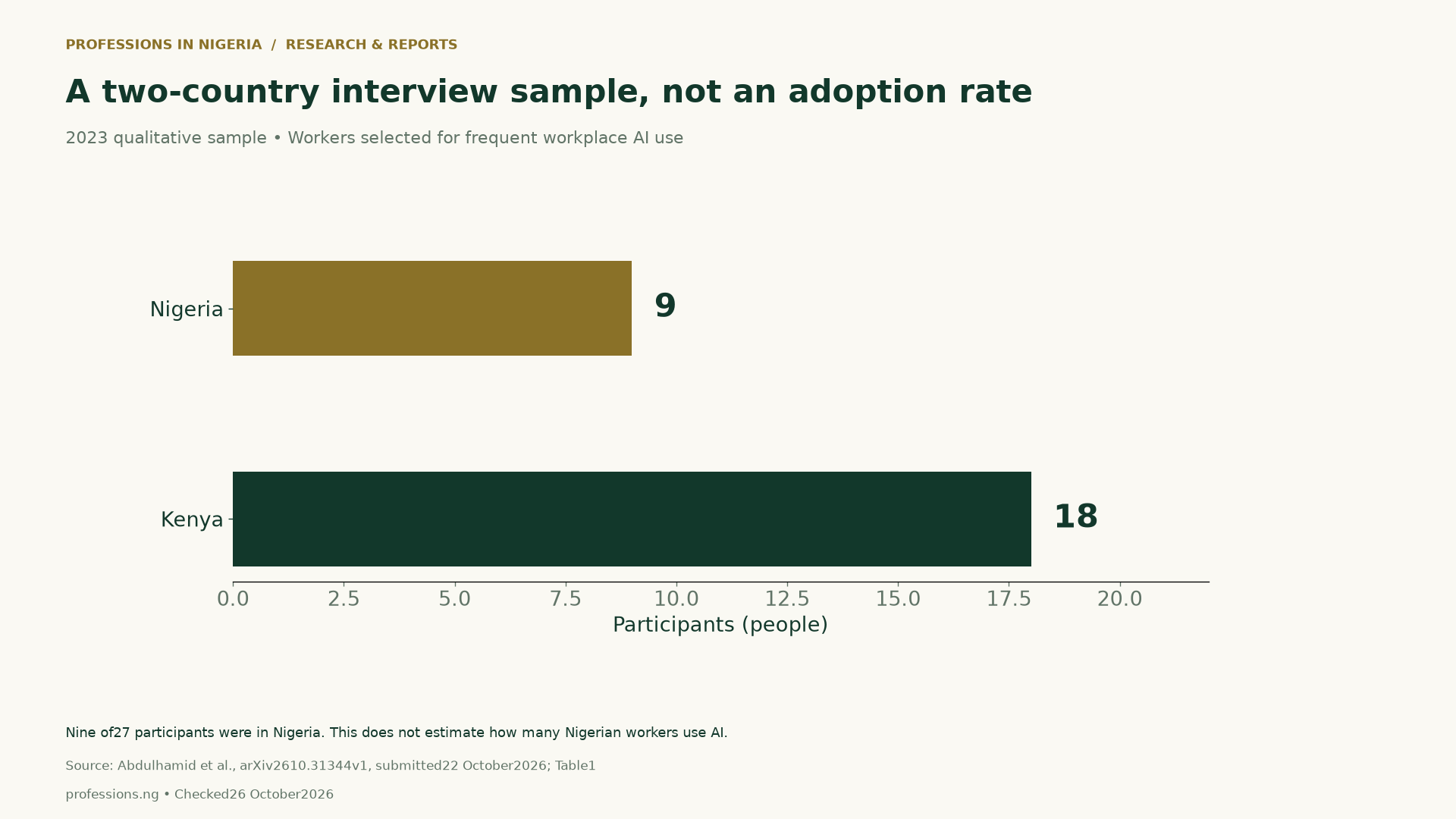
Checked October 26, 2026. A new preprint submitted October 22 draws on July–October 2023 fieldwork. It covers 21 interviews, 27 workers and 21 small businesses. Nine participants were in Nigeria and 18 in Kenya. Recruitment selected frequent workplace AI users. This is qualitative evidence, not a national adoption estimate or an established peer-reviewed labour-market finding.
AI workplace skills Nigeria: read the sample before the headline
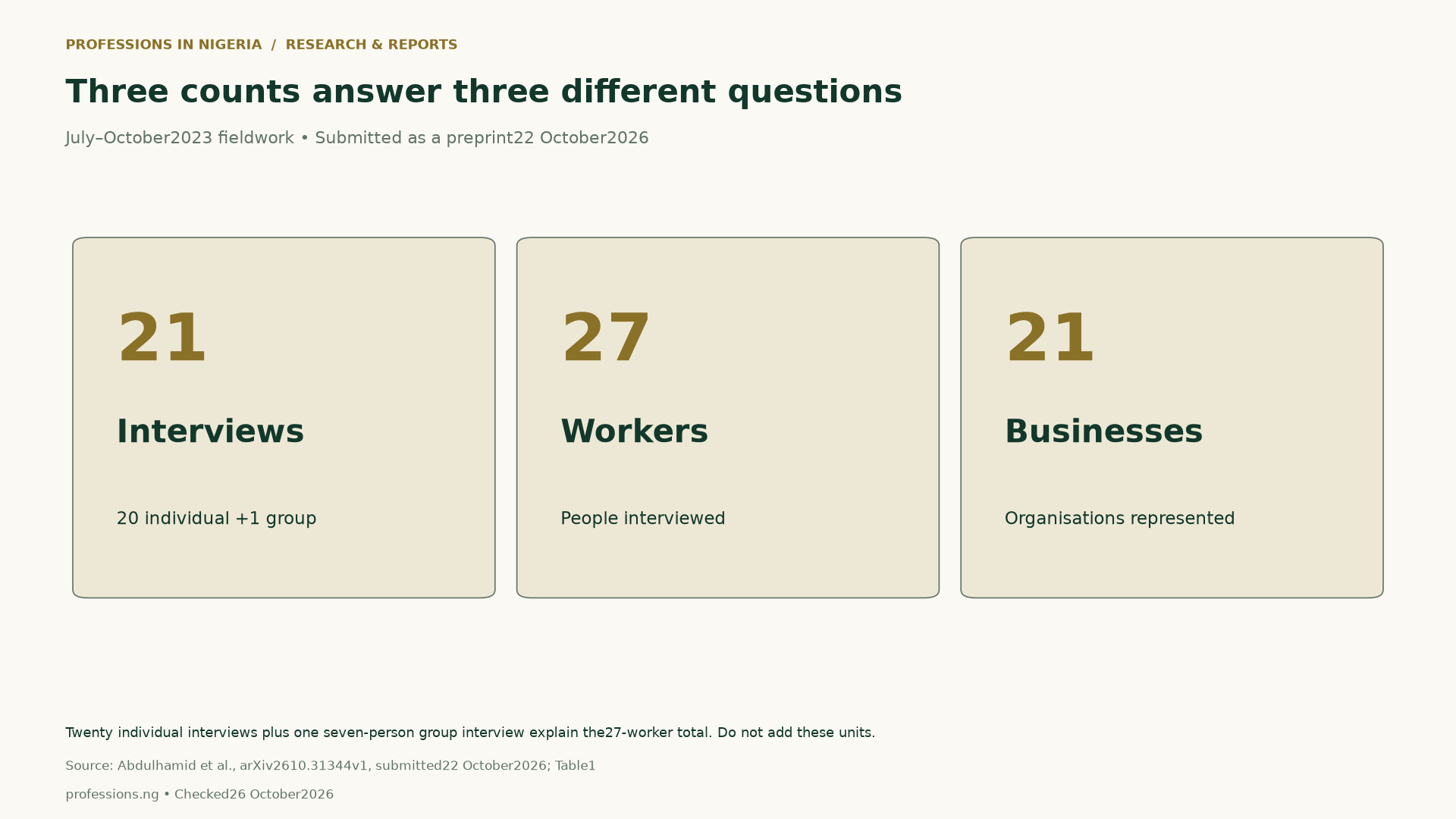
A reader should first ask what was counted. An interview is a research encounter; a worker is a person; a business is an organisation. These units can overlap, so adding them would not produce a meaningful total. The graphic below keeps them separate.
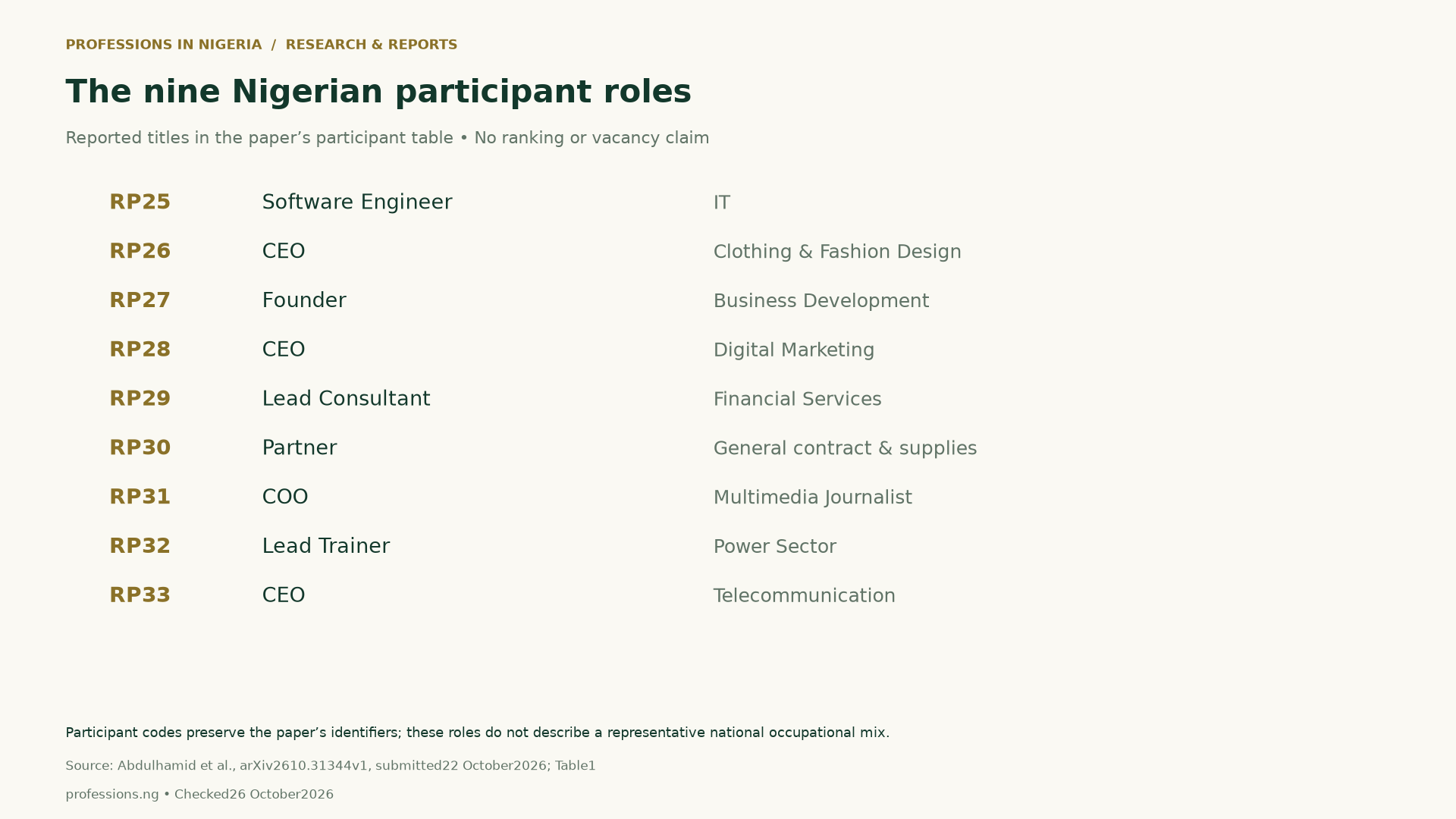
The participant table also identifies the Nigerian roles shown below. Keep their participant codes when citing this extract. The paper describes checking, revision and local adaptation; it does not establish a salary premium, job-placement rate or current national demand for these roles.
A proposed exercise: make a fictional client update defensible
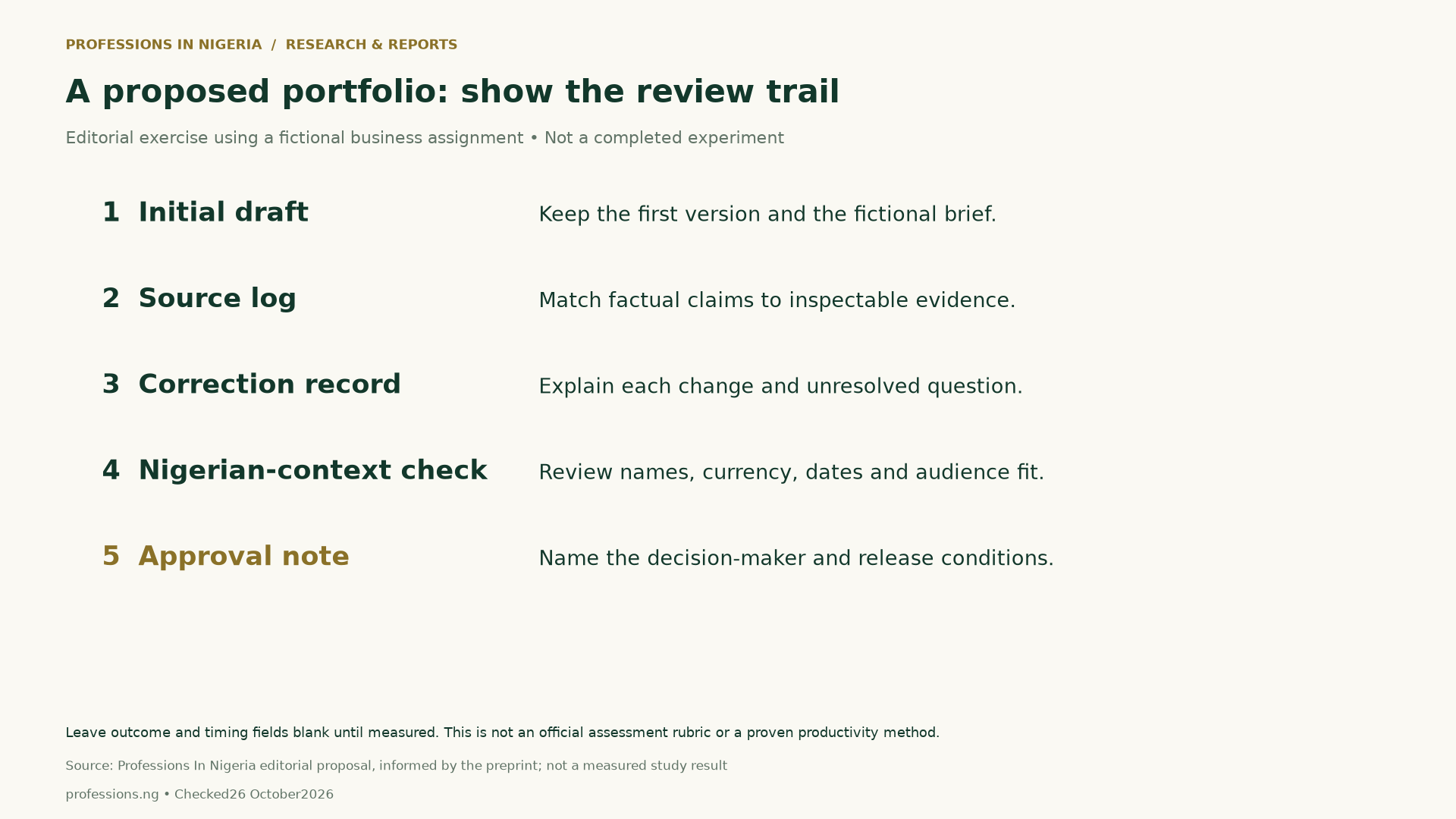
Our original contribution is a five-part practice exercise. It is an editorial proposal, not an assessment used by the researchers or a tested hiring intervention. Choose a fictional Nigerian stationery supplier preparing a short customer update about a proposed delivery service. Invent the business, products and customer details. Do not present the exercise as work completed for a real client.
First, write a brief that defines the intended audience, channel and decision. For example, the imaginary owner needs a 300-word email that explains a proposed service and asks customers whether they would use it. Supply a small, clearly fictional fact sheet. Separate facts supplied by the brief from claims that require independent research.
Next, generate an initial draft using a tool your organisation permits. Retain that first version alongside the brief. Record the tool and date if you choose to show the work publicly. This gives a reviewer something concrete to compare with the final version. A screenshot of a polished final answer alone cannot show which errors you found or how you resolved them.
Build a source log that another person can inspect
List every factual claim that could affect a reader’s decision. Give each a stable item number. For a price, retain the currency, unit and date. Identify the actual policy owner for a service condition. For an external claim, record the page title, direct URL, relevant date and the specific passage or table you checked. A search-result snippet is a lead, not the final evidence.
Then compare the claim with the source. Does it cover Nigeria, another country or a global sample? Does its date describe publication or the period measured? Is a percentage a rate, a share or a change in percentage points? These questions turn a generic instruction to verify facts into a reproducible review trail.
If a source cannot support the sentence, change or remove it. Where uncertainty remains material, mark the item unresolved and hold that part of the draft. Do not invent a citation to make a blank field look complete. A clear hold decision can demonstrate better judgement than an impressive-looking but untraceable answer.
| Portfolio item | Evidence to retain | Question for the reviewer |
|---|---|---|
| Initial draft | Brief and first version | What was supplied, and what did the tool add? |
| Source log | Claim IDs, direct links and dates | Can another reader reproduce the check? |
| Correction record | Before/after text and reason | Does the revision resolve the actual issue? |
| Context check | Audience, place, currency and language notes | Does the message fit its intended Nigerian reader? |
| Approval note | Decision, scope and outstanding items | Who can authorise release, and what remains on hold? |
Check Nigerian context without inventing local expertise
Use the context section to check names, places, date formats, currency and audience assumptions. For the fictional supplier, distinguish a naira amount from a foreign-currency example. Make a delivery promise conditional on the invented brief rather than implying that a real courier has confirmed it. Avoid filling gaps with stereotypes about Nigerian customers or businesses.
For language work, explain what you can and cannot assess. If a message uses a language you do not know well, ask an appropriate speaker to review it before describing it as ready. Record that reviewer’s actual role and feedback only when the review happened. The blank template is not a reason to invent a translator or approval.

Protect client information while demonstrating the process
A public portfolio should use synthetic material wherever possible. Do not upload client names, private contracts, employee records, account numbers or unpublished business plans merely to make an example look realistic. Follow the organisation’s approved tools and data-handling process. Permission to work on a document is not automatically permission to publish it in a portfolio.
For background, the Nigeria Data Protection Commission’s FAQs explain personal-data processing and the Act’s scope. NDPC also hosts a February 2026 joint statement about AI-generated imagery and privacy. These resources reinforce why a public exercise should avoid identifiable people and unauthorised records. They do not certify any particular tool or this portfolio.
Show AI workplace skills in Nigeria through decisions, not speed claims
Write a short final approval note. State whether the proposed message is approved, needs revision or remains on hold. Name the decision-maker’s role, the version reviewed and any conditions. An applicant can explain the checks they performed, but must not imply authority to approve regulated advice or a real employer’s communication when they do not have it.
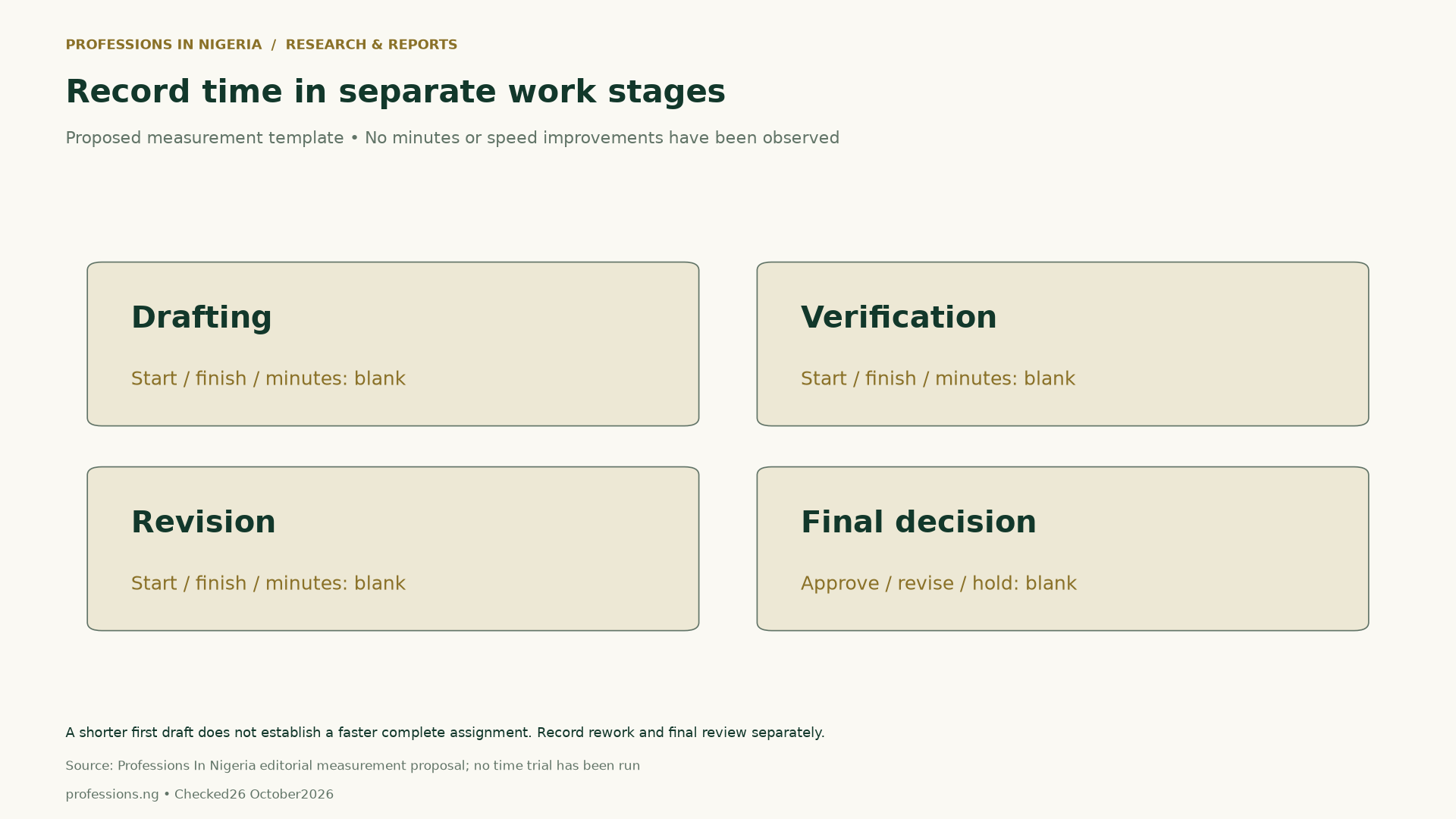
If you later run a timed exercise, record drafting, verification and revision separately. Include the final review decision. Compare equivalent briefs and report how you measured quality. Until that work happens, leave the time fields blank. We have run no productivity experiment and report no minutes saved, accuracy gain or return on a training course.
When evaluating training, ask to see an example of a corrected claim, a failed check and a documented hold decision. Ask who reviews domain-specific work and how personal data are handled. A course certificate may document attendance or assessment under that provider’s rules; investigate those rules before presenting it as evidence of professional competence.
For broader context, see our AI careers overview. The present report addresses a narrower question: what evidence can make the review process visible? Our digital teaching skills report applies a similar distinction between training participation and demonstrated work to education.
Methods, limitations and reusable downloads
We checked the submission record and full version-one paper, then transcribed its participant table into a source-linked register. The five-part exercise and review log are our proposals. We collected no new interviews, tested no applicants and evaluated no client deliverables. Examples throughout the exercise are fictional; blank fields indicate information not yet observed.
The study’s small, selected sample and older fieldwork limit generalisation. We do not estimate how many Nigerian workers use AI today, rank tools or infer hiring demand. Check the paper for its complete methods and limitations before reusing its findings. A future revised version may differ from the version checked here.
Download the AI workplace sample register (CSV) and blank AI workplace review log (CSV). The register contains 27 source-linked participant rows. The log contains five blank numbered review rows, with separate fields for evidence, corrections, context, privacy and decisions. It contains no invented review results.
Suggested citation: Professions In Nigeria, “AI Skills for Nigerian Professionals: The Work Between Draft and Client Delivery,” checked October 26, 2026. Attribute the interview research to Abdulhamid and colleagues and the proposed exercise to Professions In Nigeria. Keep the 2023 fieldwork period and preprint status visible when sharing the sample figures.


