




Industry Overview
The agro-processing sector links farms to markets.
It converts raw agricultural products into processed goods.
The sector offers diverse employment and business possibilities.
Sector Characteristics
This sector connects agricultural production with market channels.
Processing activities add measurable value to raw farm outputs.
The sector creates multiple business and employment pathways for actors.
Market Dynamics
Demand for processed food and agricultural inputs supports markets.
Supply chain coordination shapes operational efficiency and business opportunities.
These dynamics influence how firms coordinate and operate across stages.
Career Pathways in Agro-processing
Career pathways connect workers to roles across the processing chain.
The sector supports employment, internships, apprenticeships, and entrepreneurship.
Roles include technical, managerial, and support positions in firms.
Employment Opportunities
Large processors and small enterprises hire technical and managerial staff.
Positions span production, quality, logistics, sales, and administration.
Workers perform production and operations tasks to manage processing activities.
- Production and operations roles manage processing activities.
- Quality control and food safety roles ensure product standards.
- Supply chain and logistics roles coordinate input and product movement.
- Sales and marketing roles develop market access and customer relations.
- Technical and maintenance roles support equipment and production continuity.
Entrepreneurship and Business Ownership
Individuals can start small-scale processing ventures or expand businesses.
Entrepreneurs add value through improved processing, packaging, and distribution.
Sound financial planning and cost management sustain commercial operations.
- Business model design covers product selection, pricing, and customer targeting.
- Partnerships and networks support sourcing and market access.
- Budgeting and cost control enable continued commercial activity.
Value-Chain Roles
Value chain stages include sourcing, processing, packaging, distribution, and retail.
Each stage requires specific skills and coordinated actions.
Actors at each stage perform roles that add and protect product value.
- Producers and aggregators supply raw materials for processing.
- Processors transform inputs into marketable products and add value.
- Packagers and distributors prepare products and move them to markets.
- Retailers and service providers complete the chain with sales and support.
Skills and Qualifications
Employers often seek technical skills, business understanding, and practical experience.
Communication, problem solving, and teamwork support success in varied roles.
Entry pathways include employment, internships, apprenticeships, and entrepreneurship.
Networking with sector actors helps find opportunities and partnerships.
Education, Technical Skills and Training Routes
Begin with a clear map of learning options and skill needs.
Next, explore formal qualifications, vocational programs, and workplace competencies.
Assess existing skills and identify gaps to target through training.
Formal Qualifications
Formal qualifications come from accredited colleges and training institutions.
They typically combine theory with assessed practical work.
Furthermore, program curricula often include quality control and processing principles.
Also, review course content for hands-on components and assessment methods.
Choosing a Program
- Check accreditation and recognition status of the issuing institution.
- Compare curriculum focus to the skills you want to develop.
- Consider access to practical laboratories or processing facilities.
- Evaluate assessment formats and industry linkage opportunities.
Vocational Programs and Short Courses
Vocational programs offer targeted training for specific processing tasks.
Also, short courses deliver practical skills in shorter time frames.
Moreover, modular courses allow learners to build skills progressively.
Additionally, seek programs that emphasize safety and hygiene practices.
Apprenticeships and Onsite Training
Apprenticeships pair learners with experienced practitioners for direct mentorship.
Meanwhile, onsite training provides real workflow exposure and practical problem solving.
Consequently, apprentices gain routine competencies and performance feedback.
On-the-Job Competencies
Develop core technical competencies through repeated hands-on practice.
Also, learn equipment operation and routine maintenance procedures.
Furthermore, practice quality control and basic testing methods regularly.
Additionally, adopt proper hygiene and safety behaviors at all times.
Moreover, build record keeping and documentation habits for process traceability.
Practice problem solving and decision making in production contexts.
Soft Skills and Workplace Behaviors
Cultivate communication skills for teamwork and clear instruction sharing.
Also, develop time management and task prioritization practices.
Furthermore, maintain professional attitudes toward continuous improvement and learning.
Building a Personal Training Plan
Then, set realistic learning goals and timelines for skill acquisition.
Also, combine formal study, vocational courses, and workplace practice strategically.
Seek mentorship and regular feedback to monitor your progress.
Maintaining and Updating Skills
Commit to ongoing learning as processes and technologies evolve.
For example, schedule periodic refresher training to retain competencies.
Additionally, document skills and achievements to show employability progress.
Finally, remain open to cross-training across related processing functions.
Selecting Commodities and Understanding Value Chains
This section explains how to choose commodities and map value chains.
It focuses on market fit, processing needs, and seasonal factors.
Use these steps to inform sourcing and product decisions.
Criteria for Choosing Crops
Start by assessing local and regional market demand for different crops.
Next, evaluate how easily each crop adapts to processing methods.
Also consider shelf life and storage requirements for raw and processed forms.
Furthermore, review input availability and agricultural seasonality patterns.
Moreover, account for required equipment and upfront capital needs.
Additionally, weigh regulatory and quality standards that affect product eligibility.
Finally, consider environmental suitability and sustainability for crop production.
Key Value Chain Stages to Map
Begin by identifying production and primary harvesting activities.
Then map aggregation and primary sorting points within the chain.
Next, include processing steps that transform raw materials.
Also map packaging, storage, and logistics stages that follow processing.
Finally, include distribution and retail channels that reach end buyers.
Sourcing and Procurement Approaches
Develop reliable sourcing by building relationships with multiple suppliers.
Also consider working with aggregators to reduce transaction complexity.
Moreover, implement simple quality checks at the point of procurement.
Additionally, explore contracts or memorandum arrangements to stabilize supply.
Finally, maintain traceability records to track source and batch information.
Managing Seasonal Supply and Inventory
Anticipate seasonal availability and plan procurement around peak harvests.
Also design storage strategies to extend raw material usability between seasons.
Moreover, consider smoothing production through staggered sourcing from different areas.
Additionally, adjust processing schedules to align with supply surpluses and shortages.
Finally, keep flexible inventory levels to respond to demand and supply changes.
Spotting Product Opportunities Along the Chain
Look for gaps where primary products could become value-added items.
Also assess potential for semi-processed offerings that meet market convenience needs.
Moreover, identify by-product uses that can reduce waste and add revenue.
Additionally, evaluate packaging or format changes that improve shelf appeal.
Finally, pilot small batches to test demand before scaling new products.
Practical Sub-Outline for Decision Making
Establish selection criteria focusing on market fit, processing ease, and seasonality.
Survey local value chains to identify procurement and processing nodes.
Publish Your Professional Profile, Business or Brand
Showcase your expertise, gain trust, and boost visibility instantly on Professions.ng.
Publish NowSet up sourcing systems and simple quality controls before scaling operations.
- Define selection criteria based on market, processing fit, and seasonality.
- Map the local value chain to locate procurement and processing nodes.
- Develop sourcing mechanisms and basic quality control procedures.
- Plan inventory and storage around known seasonal cycles.
- Test product opportunities with low-cost pilots and iterate quickly.
Explore Further: How Livestock Specialists Are Transforming Nigeria’s Farming Sector
Business Planning and Start-up Roadmap
Earlier sections gave an industry overview and career pathways.
This section covers market research and viable business models.
It also outlines costs, planning, and funding considerations.
Market Research
Market research clarifies customer needs and demand.
Use both primary and secondary methods to gather evidence.
Validate concepts with small tests before wider release.
Define Research Goals
Define clear questions your research must answer.
Specify target customers and market segments to explore.
Clarify assumptions and hypotheses that guide your work.
Primary Research Methods
Conduct interviews to gather direct customer feedback.
Run simple surveys to test demand and preferences.
Collect qualitative and quantitative input for decisions.
Secondary Research Methods
Review existing market reports and industry summaries.
Analyze competitor presence and general market positioning.
Synthesize findings to inform strategy and positioning.
Market Validation
Test product concepts with small batches or samples.
Collect feedback and iterate product specifications accordingly.
Use iterations to better match customer preferences.
Viable Business Models
Choose a model that aligns with your resources and goals.
Consider how each option affects margins and operations.
Match model choice to capacity and market demand.
- Direct sales to consumers through local retail or markets.
- Wholesale supply to retailers or institutional buyers.
- Contract processing for other producers or brands.
- Value-added product lines that increase product margins.
Cost Structure
Map your cost categories to understand financial needs clearly.
Include fixed, variable, and operating expenses in estimates.
Accurate cost grouping supports realistic planning and forecasting.
Cost Categories
List fixed costs such as rent and equipment depreciation.
List variable costs such as raw materials and packaging.
Include operating costs like utilities and labor expenses.
Estimating Start-up and Operating Costs
Create conservative cost estimates for initial setup expenses.
Estimate monthly operating costs for routine activities and overhead.
Separate one-time expenses from recurring expenditures clearly.
Managing Cash Flow
Project cash inflows and outflows to maintain liquidity.
Build a small cash buffer for unexpected expenses.
Monitor cash flow projections to avoid shortfalls.
Writing a Business Plan
Prepare a business plan to present your idea and approach.
Summarize market analysis, operations, marketing, and finances.
Use realistic assumptions and clear explanations in projections.
Essential Plan Components
Include an executive summary that outlines the business concept briefly.
Provide a market analysis summarizing research findings and customer needs.
Describe operational plans for production, sourcing, and quality control.
- Executive summary that outlines your business concept briefly.
- Market analysis that summarizes research findings and customer needs.
- Operational plan describing production, sourcing, and quality control.
- Marketing and sales strategy explaining how you will reach customers.
- Financial plan with projected revenues, costs, and cash flow.
Writing Tips
Keep language clear and concise for prospective partners or funders.
Use realistic assumptions and explain the basis for projections.
Highlight key risks and mitigation approaches briefly and directly.
Start-up Roadmap
Create a start-up roadmap with phased milestones.
Plan activities from setup to pilot and scaling stages.
Use pilot results to adjust plans before scaling operations.
Planning Phase
Refine your business model and validate market interest first.
Finalize cost estimates and prepare initial financial forecasts next.
Set measurable milestones and timelines for early tasks.
Set-up Phase
Secure a suitable workspace and necessary processing equipment.
Establish supply arrangements and quality control procedures meanwhile.
Confirm that equipment and systems meet production needs.
Pilot and Launch Phase
Run a pilot to test operations and customer acceptance.
Collect data and adjust processes before a wider launch.
Use pilot insights to refine production and marketing approaches.
Scaling Phase
Scale production gradually while maintaining product quality.
Refine sales channels and expand market reach over time.
Monitor performance and adapt operations during growth.
Funding and Risk Management
Identify funding options and plan for capital needs.
Prepare clear financial documentation to support funding requests.
List risks and assign mitigation steps for each area.
Funding Options Overview
Identify potential funding sources that match your stage and needs.
Prepare clear financial documentation to present to funders.
Compare funding terms and implications before deciding.
Risk Assessment and Mitigation
List operational, market, and financial risks clearly.
Assign simple mitigation steps to each identified risk area.
Review risks periodically and update mitigation plans.
Learn More: What It Takes to Work as an Agricultural Policy Advisor in Nigeria
Funding and Investment Preparedness
Plan funding and investment needs for your processing operation.
Focus on start-up capital and funding for early operations.
Gather documents, forecasts, and controls to support funding requests.
Assessing Funding Needs
Assess the funding you need for start-up and early operations.
Also, classify expenses into one-time costs and recurring costs.
Consider equipment, facility setup, raw materials, labor, and working capital.
- Equipment and processing machinery.
- Facility setup and utilities.
- Raw materials and inventory procurement.
- Labor and training expenses.
- Working capital for operating cycles.
Writing Effective Funding Proposals
Begin the proposal with a clear summary of the project.
Next, describe how the processing activity will generate value.
Also, explain planned use of funds and key milestones.
Include simple financial projections for cash flow and break-even points.
Finally, outline key risks and how you will manage them.
Documents to Prepare
Prepare a concise executive summary for funders.
Write a clear use of funds statement.
Assemble basic financial records and short-term cash flow forecasts.
Accessing Loans and Grants
Identify lenders and grant opportunities that match your needs.
Prepare tailored documentation that meets lender or grantor criteria.
Show how funds will improve production or strengthen income streams.
Be ready to explain repayment plans and grant reporting requirements.
Publish Your Professional Profile, Business or Brand
Showcase your expertise, gain trust, and boost visibility instantly on Professions.ng.
Publish NowManaging Start-up Finances
Open a separate account for business transactions immediately.
Set up basic bookkeeping to record income and expenses daily.
Monitor cash flow weekly to avoid funding shortfalls.
- Prioritize cash flow over profits in early stages.
- Maintain a reserve for unexpected expenses.
- Control inventory levels to reduce holding costs.
Financial Records and Controls
Implement simple bookkeeping and organize receipts systematically.
Reconcile accounts regularly to detect errors quickly.
Separate personal and business expenses for clear audit trails.
Investor and Lender Readiness
Prepare a brief pitch that summarizes the opportunity and needs.
Practice concise responses to likely financial questions.
Keep an updated one-page summary of key financial facts.
This section complements your business planning work briefly.
See Related Content: How to Build a Career as an Agricultural Extension Officer in Nigeria
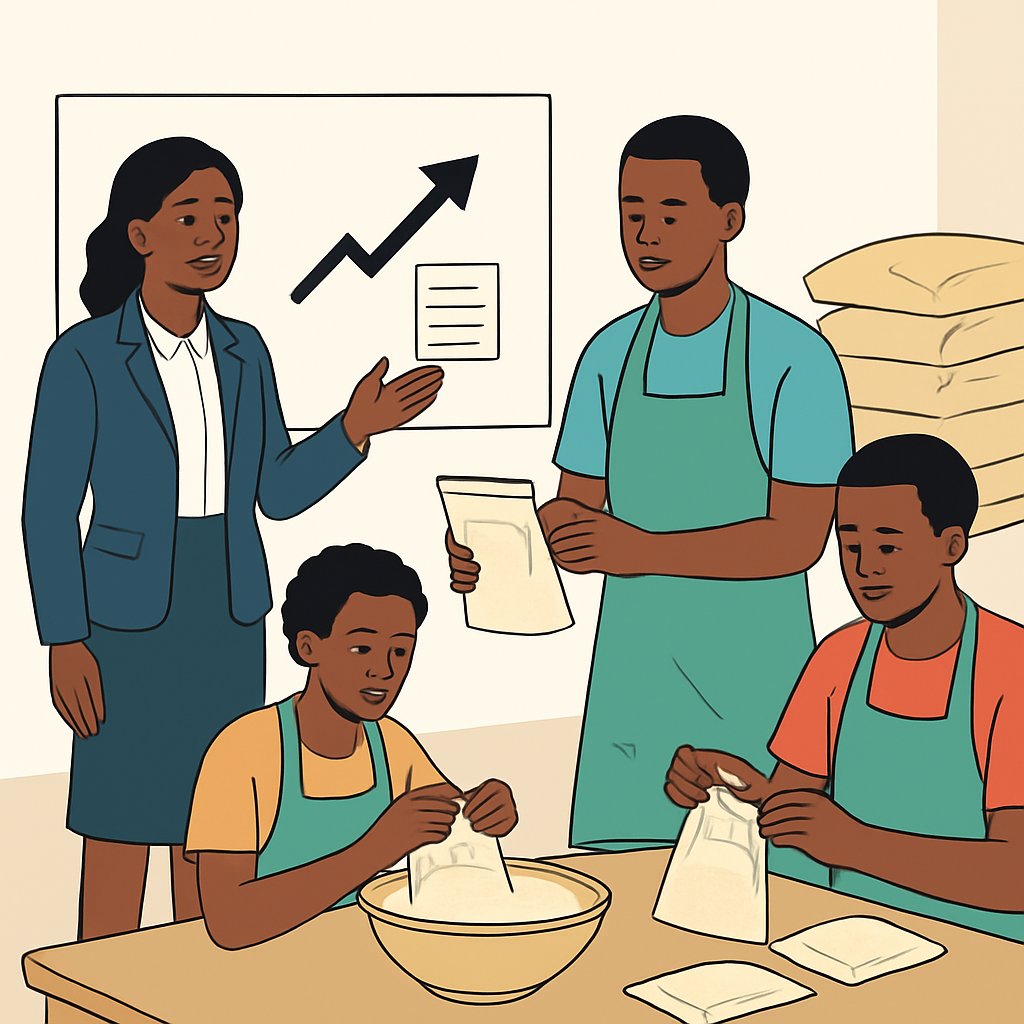
Regulatory compliance and quality assurance: food safety, licensing, certification and meeting local/export standards
Food safety forms the foundation of quality assurance in agro processing.
Identify relevant food safety requirements early.
Plan controls separately for raw materials, processing, and finished products.
Understanding Food Safety Requirements
Review hygiene rules to prevent contamination during operations.
Anticipate temperature management rules for perishable items.
Also, map controls across inputs, processes, and outputs.
Licensing and Registration
Obtain licenses from the appropriate regulatory bodies before trading.
Register your facility and products as required by authorities.
Renew licenses on schedule to remain compliant with rules.
Certification and Quality Systems
Implement a documented quality management system within your operation.
Adopt hazard control approaches that suit your processing steps.
Seek certification that aligns with market expectations when ready.
Meeting Local and Export Standards
Understand differences between local and export market requirements.
Adjust product specifications to meet destination market expectations.
Plan testing and prepare documentation for export compliance early.
Practical Steps to Implement Compliance
Start with a compliance gap assessment to identify missing controls.
Develop standard operating procedures for critical processing steps.
Train staff regularly on food safety and hygiene practices.
- Conduct a compliance gap assessment to identify missing controls.
- Develop standard operating procedures for critical processing steps.
- Train staff regularly on food safety and hygiene practices.
- Establish cleaning and sanitation schedules and monitor adherence.
- Implement incoming material checks and approve suppliers appropriately.
- Maintain and calibrate equipment to preserve accuracy and safety.
Record keeping and Traceability
Keep clear records of inputs, processes, and distributions.
Maintain traceability to enable quick responses to issues.
Store records securely for regulatory review and verification.
Audits, Inspections and Corrective Actions
Prepare for regular inspections by regulatory authorities and buyers.
Conduct internal audits to find improvement opportunities.
Implement corrective actions promptly when nonconformities arise.
Continuous Improvement and Staff Development
Promote a culture of continuous quality improvement across your team.
Invest in ongoing staff development for compliance skills.
Measure training outcomes to support targeted skill growth.
Key Documentation Checklist
Assemble required documents into a maintained documentation checklist.
Update records promptly and retain proof of compliance actions.
Ensure staff can access documentation during audits and inspections.
- Keep copies of all licenses and permits for the facility and products.
- Maintain a quality manual and documented standard operating procedures.
- Retain staff training records and competency evidence.
- Store testing results and laboratory certificates for finished products.
- Document supplier approvals and incoming material checks consistently.
- Use traceability logs to link batches to sources and destinations.
- Keep cleaning, maintenance, and pest control records up to date.
Seek professional guidance when interpreting complex regulatory requirements.
Also, consider external audits to validate your quality systems.
Learn More: What You Need to Know About Aquaculture Careers in Nigeria
Operations and Technology Setup
This section covers operations and technology setup for processing facilities.
It outlines site selection, equipment choices, and production workflow.
Also it discusses workforce roles, maintenance, and utilities handling.
Site Selection and Layout Considerations
Select a site with reliable access to raw materials.
Choose a location with efficient transport links.
Ensure basic utilities are available on site.
Design the layout for simple material flow and safety.
Plan space for future expansion and storage needs.
Equipment and Tools
Identify core processing machines that suit the product type.
Also list auxiliary equipment for cleaning and packaging.
Consider small tools and protective gear for staff safety.
Plan for spare parts and basic consumables on site.
- Capacity alignment with projected production volumes.
- Ease of operation and maintenance requirements.
- Energy and water demand for each equipment piece.
Production Workflow and Process Mapping
Map a clear workflow from raw materials to finished products.
Include stages for inspection and quality control.
Allocate steps for efficient material handling and storage.
Document standard operating procedures to ensure repeatability.
- Receiving and inspection of raw inputs.
- Cleaning and preparation of materials.
- Main processing and transformation operations.
- Packaging and labeling for distribution.
- Storage under appropriate conditions before dispatch.
Workforce Structure and Skills
Define roles required for operations and supervision.
Specify skill sets needed for each role.
Plan on-the-job training and ongoing skills development.
Assign clear responsibilities to avoid operational gaps.
- Operators who run processing equipment.
- Maintenance staff who handle routine upkeep.
- Quality personnel who monitor product standards.
- Logistics staff who manage storage and transport.
Basic Maintenance Practices
Establish routine inspection checklists for machinery and utilities.
Implement preventive maintenance procedures to reduce downtime.
Keep simple logs of repairs and spare parts used.
Train staff in basic troubleshooting and safe equipment handling.
- Daily cleaning and lubrication tasks.
- Periodic checks for wear and performance.
- Secure storage for spare parts and consumables.
Utilities and Waste Handling
Plan for reliable energy and water supply to support production.
Allocate space for safe temporary waste storage.
Design processes to minimize material losses and waste generation.
Market Access Branding and Scaling Strategies
This section explains market access, branding, and scaling strategies.
It covers channels, partnerships, pricing, and product development.
Use these ideas to plan channel choices and growth steps.
Overview
Accessing markets requires deliberate channel choices.
It also requires clear branding.
Therefore plan channels, partnerships, pricing, value addition, and growth steps.
Distribution Channels
Select distribution channels that fit product shelf life.
Evaluate channel margins and logistical complexity carefully.
Also ensure channels align with your brand positioning.
Channel Options
Consider several channel types for product distribution.
Choose channels that reach target customers effectively.
Pilot direct and indirect channels to find the best fit.
- Sell directly to consumers at local markets and events.
- Supply retailers and independent shops serving target customers.
- Work with wholesalers to reach broader geographic areas.
- Use digital platforms to create a remote sales presence.
- Consider institutional buyers for stable demand streams.
Channel Selection Criteria
Match channels to product shelf life and handling needs.
Also evaluate channel margins and logistical complexity.
Finally select channels that align with brand positioning.
Partnerships and Networks
Form partnerships to secure inputs and market access.
Publish Your Professional Profile, Business or Brand
Showcase your expertise, gain trust, and boost visibility instantly on Professions.ng.
Publish NowEngage networks to gain market intelligence and referrals.
Establish buyer agreements to provide offtake stability.
Types of Partnerships
Partner with suppliers to secure reliable raw materials.
Work with processors or co-packers to share capacity.
Negotiate buyer agreements and join business networks for referrals.
- Partner with input suppliers for reliable raw material access.
- Engage with processors or co-packers for shared capacity.
- Form buyer agreements with retailers or institutions for offtake.
- Join business networks to exchange market intelligence and referrals.
Managing Partnerships
Define clear roles and expectations in written agreements.
Set performance checkpoints to monitor collaboration results.
Nurture trust through regular communication and mutual problem solving.
Pricing Strategies
Create a pricing approach that covers costs and value.
Test pricing in channels to observe customer responses.
Adjust tactics to boost trial purchases and transaction value.
Approach to Pricing
Calculate costs accurately before setting price points.
Consider perceived value when adjusting prices.
Test prices across channels and monitor customer reactions.
Pricing Tactics
Use introductory offers to encourage trial purchases.
Bundle products to increase average transaction value.
Adjust pricing by channel to reflect added costs.
- Use introductory offers to encourage trial purchases.
- Bundle products to increase average transaction value.
- Adjust pricing by channel to reflect added costs.
Branding and Product Positioning
Define a clear and consistent brand identity.
Use packaging and labels to communicate quality and use cases.
Maintain visual consistency across customer touchpoints.
Brand Identity
Craft a simple brand message that customers understand.
Communicate quality and use cases on labels and packaging.
Ensure visual elements remain consistent across channels.
Building Trust
Highlight production standards and product benefits clearly.
Share customer feedback to reinforce credibility and reliability.
Present certifications or standards when they apply.
Value Addition and Product Development
Identify ways to add value to primary products.
Offer formats that suit urban consumers and varied uses.
Create secondary products to reduce waste and recover value.
Forms of Value Addition
Develop convenience formats to meet urban consumer needs.
Produce processed variants to extend shelf life and uses.
Convert byproducts into secondary products to reduce waste.
- Create convenience formats to meet urban consumer needs.
- Offer processed variants that extend shelf life or use cases.
- Develop secondary products from byproducts to reduce waste.
Innovation Practices
Iterate product features based on customer feedback and sales data.
Pilot new formats on a small scale before wider release.
Use pilot results and sales data to refine product features.
Growth Planning and Scaling Execution
Plan growth with attention to capacity and supply consistency.
Phase investments to match revenue and capacity growth.
Train staff in new processes before increasing output volumes.
Scaling Readiness
Assess production capacity against projected demand before scaling.
Also confirm supply consistency to avoid disruption during growth.
Verify workforce readiness and equipment availability.
Implementation Roadmap
Set measurable short term targets linked to channel expansion.
Plan phased investments to match revenue and capacity growth.
Train staff in new processes before you increase output volumes.
- Set measurable short term targets linked to channel expansion.
- Plan phased investments to match revenue and capacity growth.
- Train staff in new processes before increasing output volumes.
Monitoring and Adaptation
Track sales by channel and adjust strategies promptly.
Review pricing, partnerships, and product mix regularly.
Refine the plan based on market feedback and performance data.
Additional Resources
Google search results for How to Start a Career in Agro-processing in Nigeria Agriculture
Bing search results for How to Start a Career in Agro-processing in Nigeria Agriculture