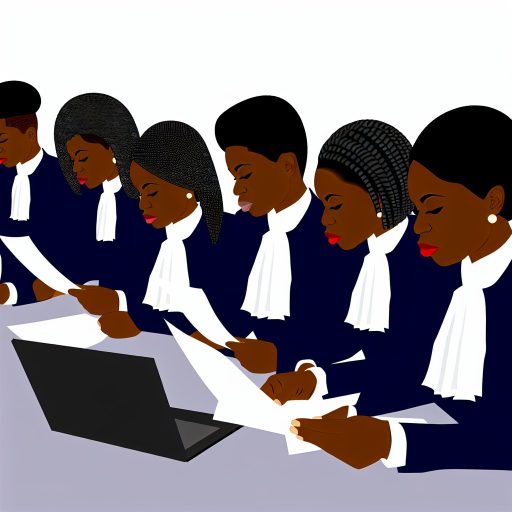




Overview of the Criminal Defense Attorney Profession in Nigeria
Role and Responsibilities
A criminal defense attorney defends individuals accused of criminal activities.
They analyze evidence to build a strong defense strategy.
Moreover, they represent clients in court proceedings and trials.
These attorneys negotiate plea bargains when appropriate to reduce charges.
They also advise clients on their legal rights and possible outcomes.
Furthermore, they collaborate with investigators and experts to strengthen cases.
Skills and Qualities Required
Effective communication skills are essential for arguing cases persuasively.
Critical thinking helps attorneys identify weaknesses in prosecution evidence.
Empathy enables them to understand clients’ situations and offer support.
Additionally, resilience is necessary to cope with stressful courtroom environments.
A strong sense of ethics guides attorneys in maintaining professional integrity.
Work Environment and Career Opportunities
Criminal defense attorneys work in law firms, courts, or governmental agencies.
Many also establish private practices serving individuals and organizations.
They often collaborate with colleagues, paralegals, and legal assistants.
Furthermore, some attorneys engage in public defense for indigent clients.
Career growth can lead to positions as senior counsel or legal consultants.
Contribution to the Justice System
These attorneys uphold the principle of fair trial for every accused person.
They ensure that the prosecution proves guilt beyond reasonable doubt.
Additionally, their work promotes accountability within the criminal justice process.
By defending rights, they help prevent wrongful convictions and miscarriages of justice.
Educational Requirements
Obtaining an LLB Degree from a Recognized University
Becoming a criminal defense attorney in Nigeria starts with earning an LLB degree.
The LLB program provides foundational knowledge in law and its various branches.
Prospective students must enroll in an accredited Nigerian university to pursue this degree.
Universities like the University of Lagos and Obafemi Awolowo University have reputable law faculties.
During the program, students study subjects such as criminal law, constitutional law, and evidence law.
This diverse curriculum equips students with essential legal concepts and case analysis skills.
Additionally, universities emphasize research, critical thinking, and effective communication throughout the course.
Admission into law faculties often requires passing the Unified Tertiary Matriculation Examination (UTME).
Furthermore, students should demonstrate consistent performance to progress through the academic years.
Choosing the right university greatly influences the quality of legal education received.
Some universities also offer internships that provide practical exposure alongside theoretical learning.
Consequently, this hands-on experience helps in understanding real-world legal procedures more clearly.
Students typically complete their LLB degree within five years of full-time study.
Finally, graduating with an LLB is a critical step before attending the Nigerian Law School.
Passing the Nigerian Law School
Admission Requirements
First, you must possess a recognized law degree from a Nigerian university.
Alternatively, foreign-trained lawyers can apply through the direct-entry route.
Applicants must submit academic transcripts and relevant identification documents.
After verifying eligibility, candidates receive admission letters from the Nigerian Law School.
Program Structure and Curriculum
The Nigerian Law School offers a comprehensive one-year professional training program.
The program covers both theoretical and practical aspects of Nigerian law.
The curriculum includes subjects like civil procedure, criminal procedure, and ethics.
Additionally, students engage in practical exercises such as mock trials and drafting legal documents.
This program prepares candidates for effective practice within Nigeria’s legal system.
Assessment and Examinations
Students undergo continuous assessment through assignments and class participation.
Final examinations test knowledge across core subjects comprehensively.
Passing these exams is mandatory to qualify for call to the Bar.
The assessment process ensures only competent individuals advance to legal practice.
Being Called to the Nigerian Bar
Requirements for Call to Bar
Upon successful completion of the Nigerian Law School program, candidates become eligible.
They must fulfill additional requirements such as character certification.
The Council of Legal Education verifies all conditions before approving candidates.
Call to Bar Ceremony
The official ceremony takes place at the Supreme Court of Nigeria in Abuja.
Newly qualified lawyers swear an oath to uphold the nation’s laws and ethics.
During the ceremony, they receive their call to Bar certificates.
This event signifies their formal entry into the Nigerian legal profession.
Practical Implications of Being Called to the Bar
Once called to the Bar, lawyers can practice as advocates in Nigerian courts.
This status allows them to represent clients in criminal and civil matters.
Furthermore, practicing lawyers must adhere to strict professional conduct standards.
Continuing legal education is encouraged to maintain competence and ethical integrity.
Learn More: Joshua Adeji & Co Lagos Law Firm Offering Litigation and Corporate Services
Completing the Mandatory One-Year National Youth Service Corps (NYSC) Program
Purpose and Importance of the NYSC Program
The NYSC program fosters national unity among Nigerian graduates.
It creates opportunities for youth to contribute to community development.
Moreover, it helps young professionals gain practical work experience.
For aspiring criminal defense attorneys, this program is a crucial step.
Registration and Posting Process
Graduates must register online through the official NYSC portal.
During registration, candidates provide personal and educational details accurately.
Subsequently, the NYSC Directorate assigns each graduate a state for service.
Placement often considers the graduate’s field of study and available positions.
Service Year Activities and Expectations
Participants engage in community development projects across various sectors.
Legal graduates often serve in law firms, courts, or government legal departments.
This placement allows them to build experience relevant to their future careers.
Volunteering in pro bono legal clinics is another common service activity.
Challenges and Strategies for Success During NYSC
Adapting to new environments can be challenging during the service year.
Graduates may face limited resources and varying working conditions.
However, resilience and networking help overcome these obstacles effectively.
Building relationships with professionals like Ms. Ngozi Okafor can open doors.
Certification and Career Advancement After NYSC
Successfully completing the NYSC service year earns a discharge certificate.
This certificate is essential for securing legal licenses and employment.
It demonstrates commitment and readiness to work in Nigeria’s legal system.
Therefore, graduates like Tunde Adegboye leverage this experience to advance careers.
Explore Further: Why Contract Law is a High-Demand Field in Nigeria
Gaining Practical Experience Through Internships or Apprenticeships
The Importance of Hands-On Training
Practical experience is essential for any aspiring criminal defense attorney.
Internships and apprenticeships offer real-world exposure beyond textbooks.
They allow students to observe court procedures firsthand.
Engaging with active cases helps develop critical legal skills.
This experience builds confidence in handling criminal defense matters.
Locating Law Firms Offering Internship Opportunities
Begin by researching reputable law firms specializing in criminal defense.
For example, firms like Okonkwo & Partners or Adeyemi Law Associates are well-known.
Publish Your Professional Profile, Business or Brand
Showcase your expertise, gain trust, and boost visibility instantly on Professions.ng.
Publish NowNext, reach out to these firms with a well-crafted application.
Networking events and law seminars provide opportunities to connect personally.
Some firms offer structured internship programs during school holidays.
Typical Internship Roles and Responsibilities
Interns often assist with legal research and drafting documents.
They may attend court sessions with supervising attorneys.
Exposure to client interviews sharpens interpersonal skills.
Interns learn to prepare case files and evidence under guidance.
This hands-on work improves understanding of criminal defense strategy.
Advantages of Apprenticeships with Experienced Attorneys
Apprenticeships provide longer-term mentorship and skill development.
Working alongside attorneys like Chinedu Adebayo helps refine advocacy skills.
Apprentices observe case management from investigation to trial stages.
They receive personalized feedback essential for professional growth.
Apprenticeships often increase job opportunities after law school.
Strategies for Gaining the Most from Internships and Apprenticeships
- Always arrive prepared and researched about assigned cases.
- Take initiative by volunteering for various tasks.
- Ask insightful questions to deepen understanding.
- Keep a journal to document lessons learned each day.
- Maintain professionalism in all interactions with clients and staff.
Following these strategies ensures a valuable and enriching training period.
Find Out More: Olive Chambers Law Firm Ibadan – Corporate and Litigation Practice Areas
Understanding Key Legal Concepts and Criminal Laws Relevant to Defense Practice in Nigeria
Fundamental Legal Principles in Nigerian Criminal Law
Nigerian criminal law operates under the principles of fairness and justice.
These principles guide the prosecution and defense processes alike.
The presumption of innocence protects defendants until proven guilty.
The burden of proof lies with the prosecution throughout the trial.
Defense attorneys must master these principles to protect clients effectively.
Major Sources of Criminal Law in Nigeria
Nigeria’s criminal law draws from multiple legal sources.
Statutes enacted by the National Assembly form the bulk of criminal laws.
Customary and Islamic laws influence criminal procedures in some regions.
The Criminal Code Act and the Penal Code act as key legislative instruments.
Defense lawyers must understand these codes to navigate the legal landscape efficiently.
Common Criminal Offenses Defended in Nigerian Courts
Criminal defense attorneys regularly handle various categories of crimes.
These offenses include theft, assault, and homicide cases.
White-collar crimes like fraud and corruption also require skilled defense.
Drug-related offenses often involve complex investigations and defenses.
Awareness of specific penalties and procedures aids defense strategy formulation.
Procedural Concepts in Criminal Defense Practice
Understanding criminal procedure is essential for effective representation.
Arrest and detention rules protect suspects’ rights.
Lawyers must ensure clients are informed about their constitutional protections.
Adherence to fair trial standards prevents prosecutorial abuse.
Expertise in bail applications and plea bargaining impacts case outcomes.
Role of Evidence in Criminal Defense
Evidence forms the backbone of criminal trials in Nigeria.
Defense attorneys scrutinize both prosecution and defense evidence closely.
They challenge unlawfully obtained or unreliable evidence in court.
Expert witnesses may strengthen or undermine case arguments.
Meticulous evidence management enhances the likelihood of favorable verdicts.
Ethical Considerations for Criminal Defense Attorneys
Criminal defense lawyers in Nigeria must uphold high ethical standards.
They have a duty to maintain client confidentiality at all times.
Attorneys must avoid conflicts of interest during case handling.
They should ensure honesty and integrity in all court dealings.
Continuous ethical conduct builds trust within the legal community and public.
Discover More: Ebadoloyi Chambers Benin City | Legal Practice in Corporate and Property Law

Developing Critical Thinking Skills
Critical thinking allows lawyers to analyze complex legal issues effectively.
It requires evaluating evidence with an objective and logical mindset.
Consequently, attorneys like Amina Balogun sharpen these skills through continuous practice.
They learn to identify weaknesses in arguments and anticipate opposing counsel’s moves.
Moreover, engaging in moot court sessions enhances their analytical capabilities.
Honing Negotiation Abilities
Negotiation plays a crucial role in resolving cases without lengthy trials.
Expert negotiators such as Kelechi Obi persuade stakeholders to reach favorable settlements.
They listen carefully to understand the other party’s interests and positions.
Effective communication builds trust and opens pathways for compromise.
Law firms like Elegba & Co offer specialized training in mediation and negotiation tactics.
Mastering Courtroom Advocacy
Courtroom advocacy demands confidence and clarity when presenting cases.
Lawyers must structure their statements to persuade judges and juries.
Successful advocates like Ifeoma Nwankwo practice public speaking regularly to improve delivery.
Additionally, knowing procedural rules ensures smooth navigation during trials.
Preparation involves anticipating counterarguments and responding promptly in court.
Many Nigerian law schools provide simulation exercises to sharpen litigation skills.
Registering with the Nigerian Bar Association
Eligibility and Admission Process
Aspiring attorneys must graduate from an accredited law school to practice law in Nigeria.
Next, candidates must complete the Nigerian Law School program to qualify for the Bar.
Passing the Bar Examination is a necessary step to gain admission to the Nigerian Bar Association.
After success, candidates are called to the Nigerian Bar to officially become lawyers.
Registration with the Nigerian Bar Association follows the formal call to the Bar.
Benefits of Membership in the Nigerian Bar Association
Membership grants access to professional development and ongoing legal education.
It also provides networking opportunities with experienced legal practitioners nationwide.
Furthermore, the association advocates for members’ rights and improves the legal profession.
Members receive updates on judicial reforms and changes in legal practices regularly.
Therefore, joining the Nigerian Bar Association enhances an attorney’s credibility and career growth.
Upholding Professional Ethics as a Criminal Defense Attorney
Core Ethical Principles for Defense Lawyers
Criminal defense attorneys must maintain integrity in all professional conduct.
Confidentiality remains essential when handling client information and case details.
Avoiding conflicts of interest helps maintain trust and impartiality with clients and courts.
Attorneys should act diligently to represent their clients’ best interests effectively.
Respect for the court and the legal system holds equal importance in professional behavior.
Responsibility in Maintaining Professional Conduct
Attorneys must strictly comply with the rules set by the Nigerian Bar Association.
They should avoid misconduct such as bribery or misrepresentation at all times.
Effective communication with clients ensures clarity about case progress and legal choices.
Continuing legal education helps lawyers remain current on evolving laws and ethics standards.
Following these principles sustains the profession’s honor and public trust.
Continuing Legal Education and Specialization Opportunities in Criminal Defense
Importance of Lifelong Learning for Criminal Defense Attorneys
Continuing legal education ensures attorneys stay updated with evolving laws.
It sharpens courtroom skills and improves client representation.
Moreover, it enhances professional credibility and ethical standards.
Legal regulations and procedures often change, so ongoing education remains essential.
Official Continuing Legal Education Programs
The Nigerian Bar Association offers regular seminars and workshops nationwide.
Publish Your Professional Profile, Business or Brand
Showcase your expertise, gain trust, and boost visibility instantly on Professions.ng.
Publish NowThese programs focus on recent developments in criminal law and procedure.
In addition, some law schools, like the University of Lagos, conduct refresher courses.
Furthermore, online platforms provide flexible learning opportunities on criminal defense topics.
Specialization Options Within Criminal Defense
Criminal defense attorneys can specialize in areas like homicide, cybercrime, or drug offenses.
Specializing allows lawyers to develop deep expertise and handle complex cases.
Institutions like the Nigerian Institute of Advanced Legal Studies offer certification in these specialties.
Likewise, attending international conferences, such as those by the International Criminal Defense Attorneys Association, broadens perspective.
Developing Practical Skills Through Training
Practical workshops focus on trial advocacy and cross-examination techniques.
Mock trials and role-plays build confidence and courtroom presence.
Mentoring from experienced attorneys like Tunde Enitan enhances learning and professional growth.
Additionally, internships at law firms specialized in criminal defense provide hands-on experience.
Joining Professional Associations and Networks
Active membership in groups like the Nigerian Criminal Lawyers Association opens networking doors.
Members gain access to exclusive seminars and legal updates.
These networks foster collaboration and knowledge sharing among criminal defense lawyers.
They also support advocates in challenging cases through peer advice and resources.
Challenges and Rewards of Practicing as a Criminal Defense Attorney in Nigeria
Common Challenges Faced in Criminal Defense
Criminal defense attorneys often face intense pressure from public opinion.
They must navigate complex legal procedures under tight deadlines.
Furthermore, limited resources can hinder effective case preparation.
In addition, some clients may withhold crucial information.
These challenges require strong problem-solving skills and resilience.
Dealing with Ethical Dilemmas in Criminal Defense
Defense attorneys regularly confront difficult ethical decisions.
They must balance client confidentiality with the pursuit of justice.
Moreover, attorneys often face pressure to compromise legal standards.
Maintaining professional integrity is essential despite these obstacles.
Ethical challenges ultimately shape a lawyer’s character and reputation.
Emotional and Psychological Demands of Criminal Defense
The nature of criminal cases can be emotionally taxing.
Attorneys witness traumatic stories and severe human suffering.
Lawyers like Amaka Nwosu develop coping strategies to manage stress.
They often rely on support networks to maintain mental health.
Despite hardships, they find motivation in advocating for the wrongly accused.
Rewards of Practicing Criminal Defense Law
Criminal defense offers profound professional and personal fulfillment.
Attorneys protect fundamental rights within Nigeria’s justice system.
They uphold the principle that everyone deserves a fair trial.
Lawyers such as Chinedu Amadi take pride in securing justice.
Successfully defending a client instills immense satisfaction and purpose.
Societal Impact and Legal Reform from Criminal Defense Work
Defense attorneys contribute to strengthening the rule of law.
They highlight deficiencies in the criminal justice system.
These efforts promote legal reforms and protection of human rights.
Moreover, their work educates the public about due process.
Ultimately, they play a vital role in advancing Nigeria’s democracy.
Building a Successful Career in Criminal Defense
Persistence and continuous learning are key to success in this field.
Networking with experienced lawyers helps expand professional opportunities.
Joining firms like Adebola & Partners enhances legal expertise.
Additionally, engaging in pro bono work develops valuable courtroom skills.
Over time, lawyers gain respect and recognition in the legal community.
Additional Resources
Nigeria Intercountry Adoption Information – Travel
Emerging Trends and Challenges in Nigeria’s Criminal Justice …