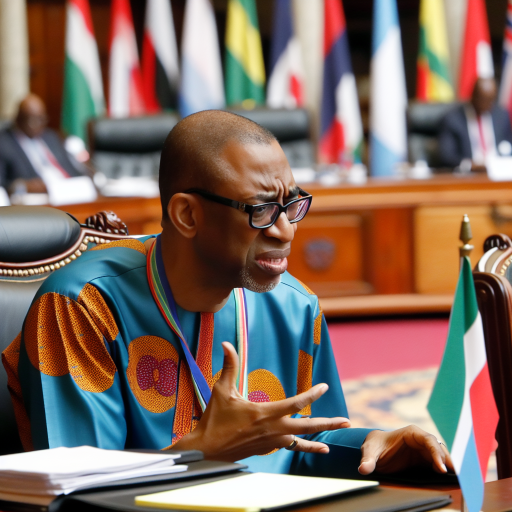




Overview of the Budget Analyst Profession in Nigeria’s Public Sector
Role and Responsibilities
Budget analysts play a vital role in managing Nigeria’s government finances.
They evaluate budget proposals from various ministries and agencies carefully.
Moreover, they analyze spending patterns to ensure efficient use of public funds.
They also monitor government departments to prevent budget overruns.
Most importantly, they help align spending with national priorities and policies.
Work Environment and Key Employers
Many budget analysts work within ministries such as Finance and Planning.
Others are employed by government agencies responsible for economic management.
In addition, state and local governments employ budget analysts to oversee local budgets.
The Federal Ministry of Budget and National Planning is a major employer of these professionals.
Private research institutes sometimes hire budget analysts for public sector projects.
Required Skills and Qualifications
Effective budget analysts in Nigeria possess strong analytical skills.
They must be proficient in financial software and data interpretation.
Furthermore, attention to detail is crucial to avoid errors in budget reports.
Most professionals hold degrees in economics, finance, or related fields.
Experience in public finance or governmental operations is highly valued.
Impact on Government Spending
Budget analysts improve transparency by providing clear financial reports.
They help reduce wasteful expenditure through careful budget reviews.
Consequently, their work supports better resource allocation across sectors.
They facilitate informed decision-making by government officials and policymakers.
Ultimately, they enhance the effectiveness of Nigeria’s public spending initiatives.
Key Responsibilities of Budget Analysts in Managing Government Finances
Budget Preparation and Planning
Budget analysts actively help government agencies prepare their annual budgets.
They collaborate with department heads like Amina Yusuf from the Ministry of Finance.
Furthermore, they analyze past expenditures to project future financial needs.
Also, they ensure proposals align with Nigeria’s fiscal policies and priorities.
Consequently, they adjust budget plans based on revenue forecasts and economic conditions.
Monitoring and Controlling Expenditures
Budget analysts monitor government spending closely throughout the fiscal year.
They track expenditures to prevent overspending and misuse of public funds.
Oluwakemi Adeoye, a senior analyst, regularly reviews financial reports for accuracy.
Moreover, they identify discrepancies and report irregularities to financial controllers.
They help enforce financial discipline by recommending corrective actions.
Evaluating Budget Performance
Analysts evaluate how well departments use their allocated budgets.
They assess the effectiveness of spending in achieving government programs’ goals.
Abdulrahman Bello uses data analytics tools to measure budget outcomes precisely.
Additionally, they prepare performance reports for policymakers and stakeholders.
This process ensures transparency and accountability in government spending.
Advising Decision Makers
Budget analysts provide expert advice to decision-makers such as ministers and legislators.
They explain financial implications of various policy options clearly and concisely.
For example, they guided Governor Chinedu Nwankwo on revenue allocation priorities.
They also recommend adjustments to maintain fiscal sustainability amid changing conditions.
Thus, they play a vital role in informed government financial management.
Conducting Financial Research and Forecasting
Budget analysts conduct research on economic trends affecting government revenues.
They forecast future budget needs by analyzing factors like inflation and oil prices.
Ibikunle Adebayo frequently collaborates with the Central Bank of Nigeria for data.
Also, they use forecasting models to support strategic budget decisions.
This helps ensure the government remains financially prepared for upcoming challenges.
Ensuring Compliance and Reporting
Budget analysts verify that all spending complies with government regulations.
They audit budget requests to detect any violations or inconsistencies.
Lekan Ojo coordinates reviews with the National Audit Office regularly.
Furthermore, they prepare detailed financial reports for transparency to the public.
Finally, these efforts strengthen trust in public financial management systems.
The Role of Budget Analysts in Policy Formulation and Fiscal Planning
Supporting Evidence-Based Policy Decisions
Budget analysts review financial data to guide policymakers in making informed decisions.
They evaluate government revenue and spending forecasts carefully.
Moreover, they assess the economic impact of proposed policies before approval.
These analysts collaborate with ministries to ensure budget alignment with national priorities.
By providing detailed reports, they enable transparent decision-making processes.
Facilitating Efficient Fiscal Planning
Budget analysts play a key role in preparing annual financial plans.
They monitor budget implementation to avoid fiscal deficits and waste.
Additionally, they recommend budget adjustments based on changing economic conditions.
Through scenario analysis, they help government adapt to unexpected financial challenges.
These experts focus on optimizing resource allocation for sustainable development goals.
Ensuring Accountability and Compliance
Budget analysts track government expenditure to guarantee adherence to approved budgets.
They identify discrepancies and suggest corrective measures promptly.
Furthermore, they verify that spending complies with legal and regulatory frameworks.
They work closely with auditors to enhance financial transparency and accountability.
Their reports support the prevention of corruption and misuse of public funds.
Collaborative Engagement with Stakeholders
Budget analysts liaise with various government agencies and departments regularly.
They incorporate feedback from ministries to refine fiscal plans effectively.
Besides government entities, they engage with financial institutions and economic experts.
This collaboration strengthens policy coherence and fiscal discipline nationwide.
Ultimately, their teamwork fosters a well-coordinated budgetary process throughout the government.
Explore Further: How Public Relations Officers Shape Nigeria’s Government Image
How Budget Analysts Contribute to Transparency and Accountability in Government Spending
Enhancing Financial Oversight
Budget analysts play a crucial role in scrutinizing government expenditures.
For example, Samson Adeyemi regularly reviews budget proposals from various ministries.
They ensure that spending aligns with legal and policy frameworks.
Consequently, this reduces opportunities for misallocation of funds.
Moreover, they provide detailed reports that expose discrepancies in spending patterns.
This transparency helps government agencies and the public understand where money goes.
Supporting Informed Decision-Making
Experts like Aisha Bello analyze financial data to advise policymakers effectively.
They evaluate economic implications of budget allocations before approval.
Therefore, leaders can make more responsible spending choices.
Additionally, budget analysts forecast potential risks associated with proposed budgets.
These insights contribute to balanced and sustainable fiscal strategies.
Facilitating Accountability through Reporting
Budget analysts prepare comprehensive financial reports for the Nigerian government.
These documents are accessible to oversight bodies such as the Auditor General.
Hence, they create a trail of accountability that deters corruption.
Also, analysts like Emeka Nwosu assist audit teams by clarifying complex budget data.
This collaboration strengthens checks and balances within government operations.
Publish Your Professional Profile, Business or Brand
Showcase your expertise, gain trust, and boost visibility instantly on Professions.ng.
Publish NowPromoting Public Engagement and Trust
By publishing budget summaries, analysts empower citizens with financial knowledge.
For instance, the Ministry of Finance shares reports authored by budget specialists.
This practice increases public confidence in government spending management.
Furthermore, transparent budgeting encourages constructive dialogue between officials and communities.
Ultimately, it leads to a more accountable and responsive government.
Utilizing Technology for Transparency
Budget analysts employ digital tools to track and monitor expenditures efficiently.
Innovators like Mariam Usman implement software that provides real-time budget updates.
These technologies enable quicker detection of irregularities in spending.
Consequently, government agencies respond faster to financial anomalies.
Technology also facilitates easier access to budget information for stakeholders.
Collaborating with Anti-Corruption Agencies
Budget analysts work closely with entities such as the Economic and Financial Crimes Commission.
They share crucial data that supports investigations into financial misconduct.
Such partnerships enhance the effectiveness of anti-corruption efforts.
In addition, analysts train officials on best practices in budget transparency.
This collaboration strengthens overall integrity in public financial management.
Uncover the Details: What It Takes to Build a Career as a Legislative Aide in Nigeria
Challenges Faced by Budget Analysts in the Nigerian Government
Limited Access to Accurate Data
Budget analysts often struggle with accessing accurate financial data.
Government records are sometimes incomplete or delayed.
This lack of reliable data hampers effective budget forecasting.
Consequently, analysts may base decisions on outdated information.
To overcome this, analysts like Chinedu Okafor advocate for improved data management systems.
Political Interference in Budgeting Processes
Political pressures frequently influence budget allocations.
Budget analysts face challenges when politicians override their recommendations.
Such interference can distort spending priorities significantly.
Analysts like Aisha Bello report difficulties in maintaining objectivity.
Therefore, political will is crucial for empowering analysts.
Inadequate Training and Professional Development
Many budget analysts lack access to continuous training opportunities.
Newer budgeting techniques are often unfamiliar to government staff.
This gap limits analysts’ ability to apply best practices effectively.
Hence, experts like Emeka Nwosu call for regular workshops and seminars.
Ongoing education improves accuracy and analytical skills.
Technological Constraints
Many government offices use outdated software for budget analysis.
Technology limitations slow down data processing and reporting.
As a result, analysts spend excessive time on manual tasks.
Investment in modern tools could enhance efficiency dramatically.
For instance, Hafsat Musa suggests adopting cloud-based budgeting platforms.
Complex Regulatory Environment
Budget analysts must navigate a complicated framework of laws and regulations.
Compliance requirements often delay budget approvals.
This bureaucratic complexity frustrates analysts and delays results.
Understanding regulatory nuances demands specialized knowledge.
Therefore, mentorship from senior analysts like Oluwaseun Adeyemi is vital.
Insufficient Collaboration Between Departments
Effective budgeting requires coordination across multiple government units.
However, poor communication often creates silos among departments.
Budget analysts find it hard to gather comprehensive financial inputs.
This isolation leads to incomplete budget proposals.
Improved interdepartmental teamwork would address these coordination challenges.
Limited Financial Resources for Budget Preparation
Budget analysts in Nigeria frequently operate under tight financial constraints.
Resource shortages affect the quality of budget research and analysis.
They must prioritize tasks due to insufficient funding for tools or staff.
For example, Amaka Eze highlights how budget limitations restrict field data collection.
Securing adequate resources is essential for thorough budget reviews.
You Might Also Like: The Importance of Diplomats in Nigeria’s Foreign Relations
Impact of Budget Analysts on Efficient Allocation of Public Resources
Enhancing Transparency and Accountability
Budget analysts like Chinedu Okafor play a vital role in promoting transparency in government spending.
They meticulously review budgets to ensure every allocation aligns with policy goals.
They track expenditure patterns to identify discrepancies or inefficiencies early.
This oversight fosters greater accountability among ministries and agencies managing public funds.
Consequently, citizens gain increased confidence in how resources are utilized.
Optimizing Resource Distribution
Budget analysts assess sectoral needs accurately to recommend optimal resource distribution.
For example, Regina Eze coordinates between finance and health ministries to prioritize critical health projects.
They use data-driven analysis to align funding with national development plans effectively.
Additionally, budget analysts adjust allocations dynamically based on emerging priorities and economic conditions.
This approach prevents wasteful spending and maximizes the impact of limited resources.
Supporting Strategic Fiscal Planning
Analysts like Ibrahim Sule support long-term fiscal planning through careful budget forecasting.
They evaluate revenue projections alongside spending commitments to maintain fiscal balance.
They identify funding gaps early, enabling proactive measures to avoid deficits.
Their insights assist policymakers in setting realistic fiscal targets and sustainable expenditure levels.
As a result, the government avoids disruptions caused by financial shortfalls or mismanagement.
Facilitating Informed Decision-Making
Jhilmil Adebayo prepares detailed budget reports that guide policy decisions transparently.
She presents key financial data that enables executives to evaluate program efficiency objectively.
Budget analysts highlight potential risks and opportunities related to funding choices.
This information empowers leaders to prioritize high-impact projects with measurable results.
Therefore, government spending aligns more closely with national development priorities.
Collaborating Across Agencies
Budget analysts coordinate among different government departments to streamline spending plans.
They foster dialogue between finance officers, project managers, and sector specialists for clarity.
This collaboration reduces duplication of efforts and improves resource allocation coherence.
Anna Maduka, for instance, regularly organizes interagency budget workshops to build consensus.
Such teamwork enhances the overall effectiveness and efficiency of public resource management.
Significance of Budget Analysts in Public Resource Management
Budget analysts ensure public resources in Nigeria are allocated wisely and responsibly.
They provide critical insights that prevent misallocation and promote fiscal discipline.
By doing so, they strengthen government capacity to deliver essential services to citizens.
Their expertise ultimately contributes to sustainable economic growth and social development.
Find Out More: How to Join Nigeria’s Immigration Service and Advance Your Career
Collaboration between Budget Analysts and Other Government Departments
Enhancing Communication and Information Sharing
Budget analysts actively engage with various government departments to gather relevant financial data.
They share budget forecasts and expenditure reports regularly with department heads.
This transparent communication promotes informed decision-making across governmental units.
Moreover, analysts utilize feedback from departments to adjust budget recommendations effectively.
They coordinate meetings to align budget priorities with departmental goals efficiently.
Publish Your Professional Profile, Business or Brand
Showcase your expertise, gain trust, and boost visibility instantly on Professions.ng.
Publish NowCoordinating Budget Planning and Implementation
Budget analysts work closely with the Ministry of Finance to align spending with national policies.
They collaborate with ministries like Health, Education, and Infrastructure to understand their financial needs.
These discussions help ensure timely resource allocation for ongoing and planned projects.
Furthermore, analysts assist in identifying potential budget gaps early in the fiscal cycle.
They also monitor departmental spending to maintain compliance with approved budgets.
Facilitating Cross-Departmental Problem Solving
When budget constraints arise, analysts bring together affected departments to explore solutions.
They help mediate discussions on reallocating funds without compromising critical services.
Collaboration fosters innovation in managing limited resources more effectively.
As a result, departments can adjust their operations tactically to meet financial realities.
This teamwork enhances overall government efficiency and accountability.
Utilizing Technology to Support Collaboration
Budget analysts implement financial software to streamline data sharing between departments.
They train staff on digital tools that improve budgeting accuracy and transparency.
Such technology allows real-time updates on spending and budget revisions.
Consequently, departments remain informed and responsive to fiscal changes.
These systems also create archives for audit and review processes, ensuring record accuracy.
Building Strong Professional Relationships
Budget analysts cultivate trust and professionalism with department leaders and their teams.
They participate in interdepartmental workshops and training sessions to build rapport.
This approach breaks down silos and encourages open dialogue about financial matters.
Ultimately, strong relationships promote smoother negotiations during budget planning.
They also motivate departments to meet financial targets collaboratively and proactively.
The Importance of Data Analysis and Forecasting in Budget Planning
Enhancing Accuracy in Budget Allocations
Data analysis allows budget analysts to assess financial trends effectively.
Through detailed examination, they identify spending patterns within government sectors.
This process aids in allocating resources more accurately to meet project demands.
Consequently, ministries like the Ministry of Finance can optimize their budget distribution.
Moreover, accurate data reduces the risk of overspending and financial mismanagement.
Supporting Informed Decision-Making
Forecasting supplies government officials with predictions about future revenues and expenses.
Budget analysts like Adeola Okafor utilize this information to guide strategic spending.
Therefore, data-driven forecasts help set realistic budget limits aligned with economic conditions.
In addition, they enable early identification of potential budget deficits or surpluses.
As a result, policymakers respond proactively to changing fiscal environments.
Improving Transparency and Accountability
Data analysis enhances transparency by documenting the rationale behind budget estimates.
Analysts like Chinedu Eze maintain detailed records of financial data and forecasts.
This transparency builds trust between government agencies and the public.
Furthermore, it facilitates audits and reviews by regulatory bodies such as the Nigerian Fiscal Responsibility Commission.
Ultimately, this promotes more responsible management of public funds.
Tools and Techniques Used in Forecasting
Budget analysts apply statistical software like SPSS and Microsoft Excel to analyze data.
These tools enable efficient handling of large datasets and trend identification.
Additionally, they use econometric models to predict inflation, revenue changes, and expenditures.
Such forecasts are essential for planning government projects and social programs.
Notably, employing these techniques improves the credibility of the entire budgeting process.
Addressing Challenges through Continuous Analysis
Government budgets face uncertainty due to fluctuating oil prices and economic shifts.
Continuous data monitoring helps analysts adjust forecasts to current realities.
For instance, analysts at the Budget Office of the Federation revise projections quarterly.
This agile approach reduces financial risks and allows timely policy adjustments.
Therefore, ongoing data analysis strengthens Nigeria’s overall budget resilience.
Training and Education
Academic Qualifications
Budget analysts in Nigeria usually hold a bachelor’s degree in finance or related fields.
Common degrees include accounting, economics, business administration, or public administration.
Many Nigerian universities, such as the University of Lagos and Ahmadu Bello University, offer relevant programs.
Furthermore, relevant certifications enhance expertise and career prospects.
For instance, certificates from the Chartered Institute of Public Finance and Accountancy (CIPFA) are valuable.
Professional Training
New budget analysts often undergo orientation within government ministries.
They learn government budgeting procedures and financial regulations during this training.
Moreover, agencies like the Nigerian Civil Service Commission provide specialized workshops.
These programs emphasize skills in financial analysis, forecasting, and reporting techniques.
Consequently, trainees become adept at managing complex government budgets.
Essential Skills and Competencies
Analytical and Technical Skills
Budget analysts must interpret financial data accurately and provide practical recommendations.
They utilize software tools such as Microsoft Excel and specialized budgeting software.
Additionally, proficiency in Nigerian government financial systems is crucial.
This knowledge enables analysts to track expenditures and identify inefficiencies.
Critical thinking aids in assessing budget proposals effectively.
Communication and Interpersonal Skills
These professionals collaborate with various government departments and stakeholders.
They present budget reports clearly to executives and policymakers.
Effective communication ensures that financial information informs decision-making.
Moreover, interpersonal skills help build trust within governmental teams.
Listening carefully to feedback improves budget adjustment processes.
Career Development Opportunities
Progression within Government Agencies
Budget analysts can advance to senior analyst or budget officer positions.
With experience, they may become budget directors overseeing entire departments.
Promotion often depends on performance, experience, and additional training.
The Nigerian Ministry of Budget and National Planning is a common employer.
Other ministries also offer growth opportunities for skilled analysts.
Continuous Professional Development
Budget analysts regularly attend seminars and training to stay current.
Institutions like the Nigerian Institute of Management provide ongoing courses.
Such training covers changes in fiscal policy and budgeting technology.
Additionally, analysts may pursue postgraduate studies to deepen expertise.
Advanced degrees in public finance or economic policy enhance career prospects.
Future Prospects and Evolving Roles of Budget Analysts in Nigerian Governance
Adapting to Technological Advancements
Budget analysts are increasingly adopting advanced data analytics tools.
This shift helps them improve accuracy in forecasting government expenditures.
Consequently, they deliver more insightful budget recommendations to policymakers.
Moreover, automation of routine tasks allows analysts to focus on strategic analysis.
In particular, machine learning applications enable better prediction of economic trends.
Expanding Responsibilities in Fiscal Policy Formulation
Budget analysts are becoming integral to the design of fiscal policies.
They collaborate closely with economic advisors to align budgets with policy goals.
This collaboration enhances the government’s response to changing economic conditions.
Furthermore, analysts assess the impact of policies on various sectors before implementation.
Therefore, their input ensures sustainable and fiscally responsible government spending.
Strengthening Transparency and Accountability
Transparency remains crucial in Nigeria’s governance and budget management.
Budget analysts help disclose detailed spending patterns and resource allocations.
Publish Your Professional Profile, Business or Brand
Showcase your expertise, gain trust, and boost visibility instantly on Professions.ng.
Publish NowThis transparency builds public trust in government financial management.
Additionally, they assist in monitoring compliance with budgetary regulations and guidelines.
Thus, they play a key role in reducing corruption and misuse of funds.
Enhancing Capacity Building and Collaboration
Continuous training programs improve analysts’ skills and competence.
Institutions like the Nigerian Institute of Management offer specialized courses.
Budget analysts also participate in international workshops to exchange best practices.
Moreover, they collaborate with civil society organizations to align budgets with development needs.
This teamwork ensures that public funds address critical social and economic priorities.
Challenges and Opportunities Ahead
Despite advancements, budget analysts face challenges like limited resources and political interference.
However, they have opportunities to influence better fiscal governance through advocacy.
They can leverage digital platforms to engage citizens in budget processes more actively.
Furthermore, emerging trends in green budgeting require analysts to incorporate environmental factors.
Ultimately, their evolving expertise will strengthen Nigeria’s public financial management system.
Additional Resources
Budgetary influence under information asymmetries: Evidence from …